Saturday, perfect weather in New York. Last weekend before summer's unofficial end. And for most of the day I've been inside our bedroom, watching four episodes from the fifth season of The Sopranos.
I never had HBO when The Sopranos originally aired from 1999 through the what-the-hell-happened finale in 2007. I can still remember being at the paper in Worthington, reading the AP review of the show when it premiered. Obviously the review praised the breakthrough show, though at the time no one knew it'd go on to become a cultural phenomenon. The show's popularity meant it was impossible to avoid knowing about the characters and the storylines, especially during the final seasons. I knew the broad strokes: Tony's manipulative mother, his shrink, his uncle, Big Pussy's betrayal and demise, the head in the bowling bag. But I didn't really know the details or the thousands of small moments that led up to the big moments everyone talked about. I didn't appreciate how perfect James Gandolfini is as an actor in the starring role and never understood the unique qualities that made Tony Soprano the perfect TV character.
Over the years I caught a few episodes during trips to my parents' or the heavily edited versions on A&E. But seeing a random episode in the third second season and then another in the final season doesn't exactly do the show justice. Now that I've watched the majority of the episodes, I can say, ah, that's what all the excitement was about. It's like when I send clips of old Showtime highlights to a Lakers fan who says they were too young to remember Magic and the boys. Hearing about it is nothing compared to seeing it.
Starting in June and thanks to Netflix, I've been going through each season of The Sopranos. It probably took until the third episode - but, more likely, the first - before I became obsessed with the show. Each season has four DVDs and with our Netflix we get three at a time, meaning I could never watch all of the shows in one sitting. Throw in Louise's movies - I can't completely hijack our account just because of this new obsession - and it was torture waiting for those final discs. I needed to know what happened, damn it. I needed to know what happened on shows that aired, in some cases, more than 10 years ago. In the first seasons of the show, the Trade Towers are visible in the show's famous opening. The real world and the TV world have changed in countless ways since those early episodes, yet when I'm inside our air-conditioned bedroom watching them, I've been transported back a decade.
No one's more passionate - or overbearing - than the person who just discovered something everyone else has known about for a long time. So when talking about The Sopranos with friends, co-workers or family, I work to keep from transforming into Chris-Farley-interviewing-Paul-McCartney, lest I come off like a newly saved evangelical who pounds people over the head with tales about the cross.
Obviously I now wish I had watched from the outset, but I also have it better than those who were there from the beginning. Instead of waiting a week for a new episode, I watch four in one sitting. Instead of waiting years for a new season, I wait days. While many of the twists have surprised me, others came as no shock. Because the show was impossible to avoid for eight years, I knew about many of the arrests, splits, betrayals and killings. Those who watched the show unfold week after week, year after year, benefited from not knowing. They got caught up in the suspense and each new episode brought new laughs or fresh horrors.
I'm to blame for part of it. Since I started watching through Netflix, I haven't been able to stop myself from reading some of the season recaps online. There's a youtube clip that shows every killing in the show's history. I watched it while I was in the middle of season two and I told myself to stop the video once it stretched into season three, but...I couldn't. So many of the killings from seasons three and four came as no surprise to me. I did manage to stop watching before any other seasons were ruined. I'm grateful for the technology that allows me to enjoy a party three years after everyone else left it, but I hate the technology - and my own weakness - for ruining the experience of being surprised.
I'm in the fifth season. Tony's cousin Tony Blundetto, played brilliantly, of course, by Steve Buscemi, has just given up on going straight and is ready to do some work for a New York family. But I already know his story ends on a rural porch, on the wrong end of Tony's shotgun. I have insulated myself from what happens in the final season, save for the diner finale. I hope that lasts.
Fortunately, the show was about so much more than shocking twists or cliffhangers. It was about more than brutal killings. And all those other moments are the ones I've been able to now enjoy, 11 years after the premiere and three years after the finale. I'm like everyone else now, marveling at Gandolfini's brilliance, laughing at Paulie's lines, tired of AJ's whining.
The poker games, Tony drinking juice from the fridge, Paulie and Christopher's adventure in the woods, Tony's mistresses, Jackie Jr.'s death, the backroom at the Bada Bing, the talks in the basement, Adriana's death, Carmela's flirtations with the priest, Tony and Meadow searching for colleges - and rats. And on and on. All the scenes in all the shows.
Fans who were always there have moved on, of course. Like some of those fans, I cling to the hope that there might someday be a long-shot Sopranos movie, while simultaneously worrying about whether it'd be any good or even possible, considering the carnage that takes out so many key characters.
So all I can do is enjoy these remaining episodes and relive the ones I've seen. I think I have 24 left. The show's ending soon for me, the same way it was ending for everyone else in the summer of 2007. I'll mourn alone, knowing there's going to be no more Tony. Like nearly everyone who enjoyed the show - whether every Sunday on HBO or during the week on DVD - I just wish there were 10 more seasons.
Showing posts with label TV. Show all posts
Showing posts with label TV. Show all posts
Saturday, September 4, 2010


Sunday, June 6, 2010
When will Willie Oleson write his autobiography?
 I stumbled across this tome in the bookstore today. Confessions of a Prairie Bitch, by Alison Arngrim. Great title, good cover and as a Little House on the Prairie acolyte, I was tempted to buy it, though I did hold off.
Arngrim portrayed one of the all-time TV villains on Little House, the detestable Nellie Oleson, the blond...uh, bitch (her word) who constantly tormented little Laura Ingalls and children with stuttering problems.
According to the book's description, Arngrim writes about Michael Landon's "unsaintly habit of not wearing underwear; how she and Melissa Gilbert (who played her TV nemesis, Laura Ingalls) became best friends and accidentally got drunk on rum cakes at 7-Eleven; and the only time she and Katherine MacGregor (who played Nellie's mom) appeared in public in costume, provoking a posse of elementary schoolgirls to attack them."
Sounds like a great book. Rum cakes! It seems odd that it took Arngrim this long to have a book come out - I think the world has been clamoring for years to know more about the lady behind Nellie. But her effort is just the most recent in an explosion of Little House books to hit stores. Three decades after the good, God-fearing townsfolk of Walnut Grove blew up their entire town to keep it out of the hands of evil land barons, the stars continue to reveal stories about themselves and the prairie.
Melissa Gilbert had Prairie Tales: A Memoir. Gilbert, Half-Pint, wrote about her affairs and struggles and the book is filled with sex talk, the type of thing that stunned many reviewers on Amazon who were apparently only looking for insight on what it was like taking a trip to Sleepy Eye or Mankato; every woman in my cubicle area who read the book finished it in about two days and couldn't wait to talk about all the dirty details.
Half-Pint's blind sister, Mary, had her own memoir. Melissa Anderson wrote The Way I See It: A Look Back at My Life on Little House. Mary was the good sister and this book is apparently much less interesting than Laura's/Melissa's. She did get nominated for an Emmy for her portrayal of Mary - who can ever forget, "I can see, I can see," when, in reality, she couldn't - but this line, in the book's description, doesn't exactly inspire people to drop 25 bucks:
"And she relates stories of her guest appearances on iconic programs such as The Love Boat and The Brady Bunch." Yeah, but did she lust after Andrew Garvey?
Little House characters pop up often in all forms of media, occasionally in unexpected places. A few nights ago while watching TV at about 2 in the morning, a commercial for Premier Bathrooms came on and a familiar, friendly face extolled their virtues.
It's Ma Ingalls, Karen Grassle. It looks like a great product, surely a lifesaver for many people. But I do wonder how Caroline Ingalls ended up as the primary spokeswoman. According to IMDB, she hasn't appeared in a movie or TV show since 1994. How did Premier Bathrooms find her? Any why? According to a grammatically confounding sentence on Grassle's Wikipedia page, she "agreed to sign up as the promotional face for Premier Bathrooms, a supplier of bathing products for the elderly and infirm due to her association with the character of Caroline Ingalls' extolling care and family values."
So, apparently, the plan is that people still associate Caroline Ingalls with love and understanding and that makes her the perfect person to pitch a bathroom, even though indoor toilets didn't even exist when Caroline was alive. This is 30 years since Little House's prime. Still, that's the power of Little House on the Prairie.
There's probably not much of a market for a memoir by Karen Grassle; she had a fairly thankless role on the show and didn't even have a plot twist that can be used as a pun for a catchy title, like blind Mary. But there are other Little House memoirs I'd like to see. They can be written by the actor, of course, but I would want dirt on the characters. I'd want show secrets and insight.
Dean Butler can pen the fake story of Almanzo Wilder and reveal if it'd be possible for a male character to date an underage girl 10 years his junior on TV today. Matthew Laborteaux needs to write a book explaining that his character, the enigmatic, troubled, athletic, mischievous Albert, did not actually die from his morphine addiction and that viewers never did actually see him succumb to leukemia. Maybe he did make it to medical school.
Charlotte Stewart needs to write a 300-page explanation for why she sent the kids home from the one-room schoolhouse in one of those classic Minnesota blizzards. What lessons did she learn from that tragedy? It can be called Teaching Miss Beadle. Harriet Oleson, otherwise known as Katherine MacGregor, seems like the perfect candidate for a parenting book. Something about the best way to raise a serial killer. On the book's cover, she can be holding Nels Oleson's testicles in a bag from the Mercantile.
Little House on the Prairie went off the air in the early 1980s. Star Michael Landon has been dead for 19 years. Yet the show lives on, in DVDs, reruns and the memories of fans and tourists who travel through southwestern Minnesota searching for the mountain Laura ran away to in one memorable, if utterly implausible, episode. But the show also lives on in literature. Or at least in the bizarre world of celebrity tell-alls.
Thursday, April 29, 2010
Battle of the ages: Lucas vs. May, short shorts vs. shorter shorts
Some people advocate spicing up the NBA All-Star weekend by adding a one-on-one competition. It sounds great in theory. Kobe vs. LeBron, Durant against Dirk, Williams vs. Paul, Cardinal vs. Scalabrine.
But there's a decent chance such an event would be sort of a disaster, something even worse than watching Nate Robinson miss dunks for a half hour. The games could feature sparkling personalities, but dull play. No matter the age group or talent level, one-on-one games often devolve into contests between a guy who constantly backs down and someone who tosses up 3-pointers on every possession. It's even worse if one of the players has a height advantage. He spends the whole game re-creating the final 10 years of Mark Jackson's career, when all he seemingly did was pound the ball while posting up, starting from 20 feet out.
Maybe I'm cynical because of my own struggles in one-on-one games. I've never been great in them, in camps or the playground. Not enough quickness, not enough endurance. By the time I've played a fifth game up to 12, I'm as exhausted as a triathlete completing the running portion. For several years my nemesis was my newspaper colleague, Mike Nowatzki. Mike's a very good player. Very competitive games. We played countless games, indoor and out. Inevitably, he'd win three of four or four out of seven.
I always broke out the same excuses. He was in better shape. I always faded late, but often dominated the first game, which was the best game to judge the superior player. He's a few inches shorter so I felt bad and shot from outside most of the time. If I really wanted to win, I'd take him inside every point. As a sportsman, I couldn't do that. Finally I'd say one-on-one games are not a true indicator of basketball greatness. It's a team sport. Someone who's better in one-on-one won't necessarily be better in a real game of five-on-five. Most of the excuses were ridiculous, but that last one had merit, I think. Allen Iverson in his prime would have probably defeated Larry Bird in his prime one-on-one. But would anyone take Iverson if the games really counted? And then I'd tell Mike I'd be drafted ahead of him in a mock YMCA basketball draft. I had no evidence to support such a claim, but I was desperate to save face.
So I'm not the biggest fan of one-on-one.
And after watching the video below, it's easier to see why I don't think a one-on-one tournament would be the savior of All-Star Weekend. It didn't really work 40 years ago, and probably wouldn't work today.
It's 1972 and it's a one-on-one NBA tourney, played in empty arenas, taped beforehand and occasionally broadcast at halftime of real games. In this battle, it's Don May against Jerry Lucas. I didn't research it, but I'm guessing May's shorts in this game rendered him sterile. Keith Jackson and Bill Russell provide commentary.
Rules: Game is to 20, by twos, and you have to win by four points.
The game starts with a fairly obvious traveling by May, though NBA ref Darrell Garretson swallows the whistle (why should one on one games be any different than the real ones?). Lucas, who has a four-inch height advantage, drills a great hook a minute into the game. I don't want to say players back then didn't have the same physical conditioning as current players, but with the score 10-8, each guy bends over to grab his shorts, the easiest sign of fatigue. I recognize that move because I also did it about 10 minutes into a one on one game. But these guys are playing for 15 grand, according to Jackson. They should be in a bit better shape.
Garretson finally calls traveling on May at a key juncture, with Lucas up 16-14. May was apparently an old-school Lamar Odom, a lefty who was unable to go right (and, no, players back then weren't these incredibly fundamentally sound players, as evidenced by the shaky ballhandling skills from both guys). This inability to go right gets him in trouble as the taller Lucas just stands there while May flails about. Lucas transforms into my dad late in the game and drains another hook to go up 18-14. The hook has always been impossible to stop, whether used by Kareem, Jerry Lucas or baby boomers in southern Minnesota.
But there's a decent chance such an event would be sort of a disaster, something even worse than watching Nate Robinson miss dunks for a half hour. The games could feature sparkling personalities, but dull play. No matter the age group or talent level, one-on-one games often devolve into contests between a guy who constantly backs down and someone who tosses up 3-pointers on every possession. It's even worse if one of the players has a height advantage. He spends the whole game re-creating the final 10 years of Mark Jackson's career, when all he seemingly did was pound the ball while posting up, starting from 20 feet out.
Maybe I'm cynical because of my own struggles in one-on-one games. I've never been great in them, in camps or the playground. Not enough quickness, not enough endurance. By the time I've played a fifth game up to 12, I'm as exhausted as a triathlete completing the running portion. For several years my nemesis was my newspaper colleague, Mike Nowatzki. Mike's a very good player. Very competitive games. We played countless games, indoor and out. Inevitably, he'd win three of four or four out of seven.
I always broke out the same excuses. He was in better shape. I always faded late, but often dominated the first game, which was the best game to judge the superior player. He's a few inches shorter so I felt bad and shot from outside most of the time. If I really wanted to win, I'd take him inside every point. As a sportsman, I couldn't do that. Finally I'd say one-on-one games are not a true indicator of basketball greatness. It's a team sport. Someone who's better in one-on-one won't necessarily be better in a real game of five-on-five. Most of the excuses were ridiculous, but that last one had merit, I think. Allen Iverson in his prime would have probably defeated Larry Bird in his prime one-on-one. But would anyone take Iverson if the games really counted? And then I'd tell Mike I'd be drafted ahead of him in a mock YMCA basketball draft. I had no evidence to support such a claim, but I was desperate to save face.
So I'm not the biggest fan of one-on-one.
And after watching the video below, it's easier to see why I don't think a one-on-one tournament would be the savior of All-Star Weekend. It didn't really work 40 years ago, and probably wouldn't work today.
It's 1972 and it's a one-on-one NBA tourney, played in empty arenas, taped beforehand and occasionally broadcast at halftime of real games. In this battle, it's Don May against Jerry Lucas. I didn't research it, but I'm guessing May's shorts in this game rendered him sterile. Keith Jackson and Bill Russell provide commentary.
Rules: Game is to 20, by twos, and you have to win by four points.
The game starts with a fairly obvious traveling by May, though NBA ref Darrell Garretson swallows the whistle (why should one on one games be any different than the real ones?). Lucas, who has a four-inch height advantage, drills a great hook a minute into the game. I don't want to say players back then didn't have the same physical conditioning as current players, but with the score 10-8, each guy bends over to grab his shorts, the easiest sign of fatigue. I recognize that move because I also did it about 10 minutes into a one on one game. But these guys are playing for 15 grand, according to Jackson. They should be in a bit better shape.
Garretson finally calls traveling on May at a key juncture, with Lucas up 16-14. May was apparently an old-school Lamar Odom, a lefty who was unable to go right (and, no, players back then weren't these incredibly fundamentally sound players, as evidenced by the shaky ballhandling skills from both guys). This inability to go right gets him in trouble as the taller Lucas just stands there while May flails about. Lucas transforms into my dad late in the game and drains another hook to go up 18-14. The hook has always been impossible to stop, whether used by Kareem, Jerry Lucas or baby boomers in southern Minnesota.
Lucas finally wins it 20-16 with a little jump hook over the shorter May. He advanced, though it seems unlikely Lucas lasted much longer in the tournament.
The video ends with a ceremony honoring Elgin Baylor at the 1972 All-Star game in LA. Baylor retired early that year, a season that ended with the Lakers winning a then-record 69 games. The Hall of Famer never won a ring, but the Lakers won the title a few months after this ceremony. It was unfortunate that Baylor's body gave out before he could finally win the title that eluded him all those years.
Baylor retired because of chronic knee injuries that took away his quickness and leaping ability. By the time he left the game, he was a shell of the player who dominated the game in the 1960s. Still, even in 1972, on a pair of bad knees, I'd have taken Elgin in a game of one on one against Lucas and May.
Actually, I think I could have taken Don May. As long as we only played one game.
Thursday, April 1, 2010
The comforts of KEYC Mankato

For people who didn't grow up in southern Minnesota or never lived there, it's hard to explain the allure of KEYC, Channel 12 News out of Mankato. The production values were average, wrong sports scores invariably popped up - leading to numerous conversations such as, "Well, it said on Channel 12 the Timberwolves beat the Bulls, but it's Channel 12, so who knows" - and there was the occasional film of a rodeo while the newscaster talked about a grisly triple murder in Iowa.
But we watched it religiously. Unlike the Twin Cities stations, it focused on the local news and gave area high school and college sports results - most of the time those scores were even accurate. A revolving door of people occupied the news desk for a few years. But much of the staff stayed for years, most notably longtime sports anchor Perry Dyke, a fixture and minor legend on the local media scene. A poor weatherman named Bob manned the meteorologist chair for a few years and became a celebrity himself. Wide-eyed Bob came off as the nicest guy in the world, but struggled on-camera, often using a halting, cracking voice while looking into the wrong camera, as if he missed class the day they taught TV presentation in meteorology school. He sounded like a 13-year-old boy asking a senior girl out on a date. Sometimes he donned a goofy hat on cold nights, the type of thing that would get snowballs thrown at him if he wore it in front of a group of unruly youngsters. On one unfortunate night, he squashed a bug that had landed on his head. People tuned in for the five-day forecast, but also to see Bob's antics.
Still we loved Channel 12. I often watched it over noon hour, both during the school year and in the summer. I'd catch up on the local news and watch "Mr. Food" in the final moments, segments that always ended with the catchphrase, "Ohh, it's so good." We trusted Mr. Food to tell us how to prepare a delightful cheese tray, even while docking him points for unoriginality.
Channel 12 was a CBS affiliate and always signed off late at night, usually around 1 in the morning. Before going dark, the station played a stirring rendition of the National Anthem, a version that included images of eagles, rivers, mountains, and a patriotic dwarf saluting the flag. Numerous times, I fell asleep on the couch, only to have the song wake me from my slumber. After watching that, I was always either ready to storm a beach or go to bed.
KEYC was also home to the incomparable polka dance festival Bandwagon, which started on the station in 1960 and has had the Bandwagon name since '61. According to Wikipedia - grain of salt, take it or leave it, read with raised eyebrow, be skeptical - it's "possibly the longest-running televised music program in the world." Or possibly not. On its own website, KEYC assumes a more humble stance, saying, "It may be the longest running locally produced entertainment program in the history of Minnesota television." That's a tight definition, and probably more accurate. Bandwagon's a dance show set in a ballroom in Mankato, where couples - most of whom qualify for discounts at restaurants and are in bed by 9 p.m. - dance while wearing red and white polka outfits. For the longest time, it seemed like no one with their original hips was allowed entry. The hosts give shoutouts to viewers and interviews the band. They read out happy birthday greetings to those at home. Then the band strikes up the music and the couples dance again. It's almost a caricature of Midwestern life, but people love it. In the 1980s, it always seemed to air at about 6 p.m. on a Saturday night. Before cable, we'd often end up tuning in. As a kid, watching Bandwagon was about a hundred times worse than having to go to church. If I see the show now on a trip home, it has its charms and I understand the appeal, which means I must be nearing the show's coveted demographic, because it's basically been the same show since before JFK beat Nixon. Local news legend Chuck Pasek hosted the show for more than 30 years, finally ending his reign in the mid-90s. Here's an audio documentary on the show.
Someone on youtube has compiled a bunch of old KEYC videos. I'd use the word classic videos, but I don't want to abuse that word. I couldn't find any Bandwagon online and no Bob the weatherman.
Here's an intro to the Noon News in 1986. A highlight is the ad for a local Embers (coincidentally named the worst restaurant in the state by my cousin Matt), which features a gigantic breakfast for $1.99. There's an odd promo where every relative of staff members gather on the set, part of the "Home" message KEYC drilled into the heads of viewers. This broadcast features the aforementioned Pasek, who brought the news - and polka - to several generations of southern Minnesotans.
Channel 12 shares many characteristics with its home state and the area it represented: earnest, competent, a bit dorky. Its heart is always in the right place, even if the cameras aren't.
Sunday, February 28, 2010
Stephen King on film: floating children and killer clowns
Today the oddly spelled SyFy channel played a couple of miniseries based on classic Stephen King books. First up was The Tommyknockers, followed by The Stand. The TV series are entertaining marathons, but the books were classics, two of my favorites by King. Pretty much all of King's work - especially his earlier books - were turned from manuscripts into screenplays and adapted to the big screen or small. Some people are surprised at a few of the movies that actually emerged from King's mind. Running Man, for instance, was a King story, though he wrote it as Richard Bachman and probably didn't imagine Arnold Schwarzenegger mumbling in the title role. The best movie to be made from a King story is Shawshank Redemption, which is actually based on King's novella Rita Hayworth and Shawshank Redemption. Stories like that - and The Green Mile - show King's range. But he remains best-known for his horror tales, and those are the ones that have made his work so attractive to Hollywood.
Two TV adaptations were probably the most frightening: Salem's Lot and It.
I've previously written about how Salem's Lot and The Shining scarred me as a kid, wounds that are probably still pummeling my subconscious. Here, again, the most infamous clip from the original Salem's Lot miniseries. Damn you, Danny Glick.
Raging and sensitive vampires are all the rage now, but they no longer interest me. Thankfully, they also no longer terrify me. Salem's Lot gets the majority of the blame, as does a thin, hardcover book in the Janesville Public Library I read countless times while growing up, which was a dumbed-down version of Bram Stoker's original. The Lost Boys also freaked me out. At carnivals I often found myself looking toward the sky, searching for a marauding gang of high-flying, hungry, ill-tempered and poorly behaved teenage vampires in desperate need for parental authority. Another frightening one: The Night Stalker, a 1972 TV movie that I caught late one weekend night.
It starred Darren McGavin, who's probably best remembered as being the dad who loves the leg lamp in A Christmas Story.
But look at that scene above, watch how part of the confrontation takes place on long steps. When we moved into our new house, the bedrooms were at the top of the steps. I'd hear creeks and picture a vampire creeping up the carpeted steps. That's what I imagined while sitting in my bedroom at night, or when we'd visit my grandpa on the farm in the old house that might have been haunted, at least according to family relatives who should no better but apparently enjoy terrorizing young people. My bedroom was the closest to the steps, meaning the demon of the night would take me before moving on to my sister and my snoring parents.
When a light came on and I could analyze the situation logically, I was able to tell myself, why would a vampire be coming up the steps, when it could simply fly through the window, or scratch the window and use his mastery of the dark powers to lure me outside? That thought process helped alleviate all my childish childhood fears, until the night my sister's boyfriend fired rocks at my window with the power of a Nolan Ryan fastball, not realizing he was attacking my room instead of alerting Lisa that it was safe to sneak out of the house for the night. So there I was, trying to sleep, as a loud thud kept hitting the window. Pitch-black outside, even darker inside. And all I hear is an overwhelming rattle at the window. I saw the undead floating outside, at least in my mind. Instead it was a teenage boy trying to corrupt Lisa.
At a certain point I came up with what I thought was the perfect plan to avoid the vampires that would one day rule the country with an iron, and frozen, fist. I vowed to become rich enough to buy a Concorde. Then, I'd use the jet to constantly fly to countries where it happened to be daylight. So if I was in Minnesota and the vampires came out at 9 p.m. on a warm summer night, I'd hop onto the Concorde, fly to California and be safe, since it'd only be 6 at night there with plenty of sunlight. If I happened to be caught in New York at 2 a.m. and the vampires were closing in, I'd call up my pilot Dominic, a former Blue Angels pilot - in the fantasy I didn't have my pilot's license, though that would have simplified the process. Dominic jetted us to London, where it'd be 8 a.m. and we'd have twelve hours of freedom and safety. I really couldn't find a single flaw with the plan, since I didn't have much respect for the flying ability of vampires.
All of that paranoia started with Salem's Lot. Blame Danny Glick's floating corpse and my own immaturity. Stephen King's imagination did that to me. Eventually I outgrew the fear, or maybe my own imagination simply dulled, to the point where I no longer visualized a world where people rose from the grave to haunt small-town children. Still, the original Salem's Lot - and not the Rob Lowe remake from 2004 - remains one of the best movie versions of King's work.
Some other notables:
It: The book is a thousand-page masterpiece, while the 1990 movie was a two-parter remembered primarily for the terrifying performance by Tim Curry as the killer clown Pennywise. It's a solid adaptation, only slightly harmed by some odd casting choices. Richard Thomas, aka John-Boy on The Waltons, played Bill Denbrough while John Ritter portrayed Ben Hanscom. Call them victims of typecasting, but neither guy could escape the past while playing the adult leaders of the Losers Club. But the movie did have Pennywise. I imagine 7-year-old kids who watched It were terrified into their teens, the same way Salem's Lot damaged me. Actually, the scary clown probably frightened just as many adults.
* Pet Sematary. Again, not as good as the book - standard disclaimer when discussing 98 percent of all movies converted from books - but still enjoyable, primarily because of another creepy, evil, cute child. Dad puts the little bastard down at the end, but dear ol' Mom makes a final visit.
* Misery. Outstanding book, superb movie, highlighted by Kathy Bates' stalker and James Caan as the writer trapped in her rural home. The most memorable scene is certainly the hobbling, which is ruined every time the movie is played on network TV or TNT or TBS, as they invariably cut away before Paul Sheldon's feet bend in a way usually seen on a football field while an announcer tells the audience to look away.
Oddly, that's not the scene I remember best. I saw the movie in the theater with a group of friends in 1990. Early in the movie, Caan drives down a mountain through a snowstorm. His car's headlights appear on the big screen. At that moment, a member of our group, Martin, who acted as our chauffeur because he got his license before anyone else and had a Suburban that could fit the whole gang, bolted up out of his seat and proclaimed, "I left my lights on!" It was a very strange association but ultimately saved his vehicle's battery, as he scrambled out of his seat and the theater to turn off his truck's headlights.
* Creepshow. One of the more underrated movies, it contained five short stories. One of the most memorable starred Ted Danson and Leslie Nielsen, before Danson became a star on Cheers and Nielsen earned fame in the Naked Gun movies. In the movie, Danson's sleeping with Nielsen's wife, so Nielsen had Ted and the gal drowned on the beach and sadistically tapes it so he can enjoy it later in the comfort of his own home. The movie's an early plug for the effectiveness of VCR's. Ted and the gal return - as if they were buried in Pet Sematary and not the beach - and give Nielsen the same treatment.
The most disgusting story in Creepshow involves a man who's more terrified of cockroaches than I was of vampires. Eventually they get the best of him, crawling out of his mouth, ears and every other place. This scene was easier to watch before I moved to New York City, the cockroach center of the world. Blech.
* Cujo. Not one of King's most memorable books and the movie's also fairly forgettable. An evil St. Bernard sick with rabies is still sort of lovable, even when slobbering on a dead body. King himself has said he barely remembers writing the book as he was drinking heavily at the time. To me, the book's memorable because after reading it, my mom swore off Stephen King books. She stopped reading him for nearly a decade. This was actually an official announcement; shortly after, I started reading him. The reason she quit? The little boy dies at the end of the book. Little kids aren't supposed to die, of course, unless they're evil and have popped out of a Pet Sematary. The kid lives in the movie. My mom was aware that it was a fiction book, but she gave up on the horror master for several years, though she eventually returned. But I think she still held a grudge.
Today most of King's books or stories become TV series, instead of big-screen films. I don't think he's any less popular with Hollywood, it's just that his more recent books aren't as easily adaptable. But in 10 or 15 years, TNT or FX or USA will remake Salem's Lot or It and another generation of children will be scarred. And I'll look into the feasibility of bringing the Concorde out of retirement.
Two TV adaptations were probably the most frightening: Salem's Lot and It.
I've previously written about how Salem's Lot and The Shining scarred me as a kid, wounds that are probably still pummeling my subconscious. Here, again, the most infamous clip from the original Salem's Lot miniseries. Damn you, Danny Glick.
Raging and sensitive vampires are all the rage now, but they no longer interest me. Thankfully, they also no longer terrify me. Salem's Lot gets the majority of the blame, as does a thin, hardcover book in the Janesville Public Library I read countless times while growing up, which was a dumbed-down version of Bram Stoker's original. The Lost Boys also freaked me out. At carnivals I often found myself looking toward the sky, searching for a marauding gang of high-flying, hungry, ill-tempered and poorly behaved teenage vampires in desperate need for parental authority. Another frightening one: The Night Stalker, a 1972 TV movie that I caught late one weekend night.
It starred Darren McGavin, who's probably best remembered as being the dad who loves the leg lamp in A Christmas Story.
But look at that scene above, watch how part of the confrontation takes place on long steps. When we moved into our new house, the bedrooms were at the top of the steps. I'd hear creeks and picture a vampire creeping up the carpeted steps. That's what I imagined while sitting in my bedroom at night, or when we'd visit my grandpa on the farm in the old house that might have been haunted, at least according to family relatives who should no better but apparently enjoy terrorizing young people. My bedroom was the closest to the steps, meaning the demon of the night would take me before moving on to my sister and my snoring parents.
When a light came on and I could analyze the situation logically, I was able to tell myself, why would a vampire be coming up the steps, when it could simply fly through the window, or scratch the window and use his mastery of the dark powers to lure me outside? That thought process helped alleviate all my childish childhood fears, until the night my sister's boyfriend fired rocks at my window with the power of a Nolan Ryan fastball, not realizing he was attacking my room instead of alerting Lisa that it was safe to sneak out of the house for the night. So there I was, trying to sleep, as a loud thud kept hitting the window. Pitch-black outside, even darker inside. And all I hear is an overwhelming rattle at the window. I saw the undead floating outside, at least in my mind. Instead it was a teenage boy trying to corrupt Lisa.
At a certain point I came up with what I thought was the perfect plan to avoid the vampires that would one day rule the country with an iron, and frozen, fist. I vowed to become rich enough to buy a Concorde. Then, I'd use the jet to constantly fly to countries where it happened to be daylight. So if I was in Minnesota and the vampires came out at 9 p.m. on a warm summer night, I'd hop onto the Concorde, fly to California and be safe, since it'd only be 6 at night there with plenty of sunlight. If I happened to be caught in New York at 2 a.m. and the vampires were closing in, I'd call up my pilot Dominic, a former Blue Angels pilot - in the fantasy I didn't have my pilot's license, though that would have simplified the process. Dominic jetted us to London, where it'd be 8 a.m. and we'd have twelve hours of freedom and safety. I really couldn't find a single flaw with the plan, since I didn't have much respect for the flying ability of vampires.
All of that paranoia started with Salem's Lot. Blame Danny Glick's floating corpse and my own immaturity. Stephen King's imagination did that to me. Eventually I outgrew the fear, or maybe my own imagination simply dulled, to the point where I no longer visualized a world where people rose from the grave to haunt small-town children. Still, the original Salem's Lot - and not the Rob Lowe remake from 2004 - remains one of the best movie versions of King's work.
Some other notables:
It: The book is a thousand-page masterpiece, while the 1990 movie was a two-parter remembered primarily for the terrifying performance by Tim Curry as the killer clown Pennywise. It's a solid adaptation, only slightly harmed by some odd casting choices. Richard Thomas, aka John-Boy on The Waltons, played Bill Denbrough while John Ritter portrayed Ben Hanscom. Call them victims of typecasting, but neither guy could escape the past while playing the adult leaders of the Losers Club. But the movie did have Pennywise. I imagine 7-year-old kids who watched It were terrified into their teens, the same way Salem's Lot damaged me. Actually, the scary clown probably frightened just as many adults.
* Pet Sematary. Again, not as good as the book - standard disclaimer when discussing 98 percent of all movies converted from books - but still enjoyable, primarily because of another creepy, evil, cute child. Dad puts the little bastard down at the end, but dear ol' Mom makes a final visit.
* Misery. Outstanding book, superb movie, highlighted by Kathy Bates' stalker and James Caan as the writer trapped in her rural home. The most memorable scene is certainly the hobbling, which is ruined every time the movie is played on network TV or TNT or TBS, as they invariably cut away before Paul Sheldon's feet bend in a way usually seen on a football field while an announcer tells the audience to look away.
Oddly, that's not the scene I remember best. I saw the movie in the theater with a group of friends in 1990. Early in the movie, Caan drives down a mountain through a snowstorm. His car's headlights appear on the big screen. At that moment, a member of our group, Martin, who acted as our chauffeur because he got his license before anyone else and had a Suburban that could fit the whole gang, bolted up out of his seat and proclaimed, "I left my lights on!" It was a very strange association but ultimately saved his vehicle's battery, as he scrambled out of his seat and the theater to turn off his truck's headlights.
* Creepshow. One of the more underrated movies, it contained five short stories. One of the most memorable starred Ted Danson and Leslie Nielsen, before Danson became a star on Cheers and Nielsen earned fame in the Naked Gun movies. In the movie, Danson's sleeping with Nielsen's wife, so Nielsen had Ted and the gal drowned on the beach and sadistically tapes it so he can enjoy it later in the comfort of his own home. The movie's an early plug for the effectiveness of VCR's. Ted and the gal return - as if they were buried in Pet Sematary and not the beach - and give Nielsen the same treatment.
The most disgusting story in Creepshow involves a man who's more terrified of cockroaches than I was of vampires. Eventually they get the best of him, crawling out of his mouth, ears and every other place. This scene was easier to watch before I moved to New York City, the cockroach center of the world. Blech.
* Cujo. Not one of King's most memorable books and the movie's also fairly forgettable. An evil St. Bernard sick with rabies is still sort of lovable, even when slobbering on a dead body. King himself has said he barely remembers writing the book as he was drinking heavily at the time. To me, the book's memorable because after reading it, my mom swore off Stephen King books. She stopped reading him for nearly a decade. This was actually an official announcement; shortly after, I started reading him. The reason she quit? The little boy dies at the end of the book. Little kids aren't supposed to die, of course, unless they're evil and have popped out of a Pet Sematary. The kid lives in the movie. My mom was aware that it was a fiction book, but she gave up on the horror master for several years, though she eventually returned. But I think she still held a grudge.
Today most of King's books or stories become TV series, instead of big-screen films. I don't think he's any less popular with Hollywood, it's just that his more recent books aren't as easily adaptable. But in 10 or 15 years, TNT or FX or USA will remake Salem's Lot or It and another generation of children will be scarred. And I'll look into the feasibility of bringing the Concorde out of retirement.
Wednesday, February 10, 2010
The dominant men of Tic-Tac-Dough
One of the more thrilling moments in sports is when a heavily favored team loses. While everyone pretends to believe in the cliche anything can happen on any given day, it's still always something of a shock when a dominant team tumbles, whether it was the 2007 Patriots or Notre Dame snapping UCLA's 88-game winning streak.
This extends to other games, even ones that don't involve a shred of athleticism.
While feeling nostalgic for 2004 today, I visited Ken Jennings' blog. Jennings, the Terminator of Jeopardy who won 74 consecutive games six years ago, still pops up once in awhile on other game shows or trivia outlets. He remains an inspiration to geeks everywhere and comes off as a good guy when he appears on TV and in his writing.
I'm not a huge game show nut, but I enjoy watching dominant game-show performances. I loved when a single family racked up win after win on Family Feud, dispatching weaker opponents with ruthless efficiency. While some families invariably had a ditzy aunt who ruined everything or an oafish brother who simply came along because the family needed a fifth member, the dominant teams exuded strength from top to bottom. They became arrogant after awhile, strangely confident in their ability to decipher the feelings of 100 randomly selected Americans. (Did the fifth member of the family ever resent their lot in life? Mom or dad usually stood in the first two spots, but occupying that final slot was like being the kid who had to play right field in Little League. Rightly or wrongly, the kid's thought of as a scrub. So's the No. 5 person on the Feud.)
When those families lost, even the victors were occasionally surprised, in the same way Buster Douglas had to have been a little shocked when he battered Mike Tyson.
But Jennings's loss might have been the most memorable defeat in game-show history. Jennings won 74 straight times, but the one he lost stands out above all the rest.
This was one of the few times the cuddly Jennings hadn't clinched the victory before Final Jeopardy. He'd been pushed, but no one expected him to lose. Nancy Zerg beat him. Nancy Zerg, who lost the next day, confirming the flukiness of her victory over Jennings. I wanted Jennings to keep winning. Wish he was still the defending champion. Wish his reign would have outlasted Trebek's reign as host. But still, watching Jennings lose was one of those memorable TV moments we usually only get in sports. A great champion falls!
Trebek immediately thinks something might be up, correctly sensing that Zerg's quick response meant she nailed the answer. Jennings's face betrays nothing, though he knew when Zerg unveiled the correct answer that his wrong answer would finish him. The crowd gasps when Jennings reveals he guessed FedEx. Surely stunned, he eventually offers his congratulations to his surprised conqueror. This was like when Y.E. Yang bested Tiger in the final round of the 2009 PGA Championship.
My love of game show savants dates back to the early 1980s. As a kid, I spent many summer days watching Tic-Tac-Dough. The guy I remember was a player named Kit Salisbury, a strapping man with nice hair and a good smile. I'd watch Kit kick ass and then I'd go shoot baskets at the city park. He defeated 38 opponents in 1984 before finally losing. Impressive, even if Tic-Tac-Dough's questions weren't designed to stump the Marilyn vos Savant's of the world. Salisbury lost when he misspelled the word...misspell (although I shouldn't mock, since I once lost a Spelling Bee on the word archery). It's safe to say that Jennings probably would have reached a hundred consecutive victories if he had played under the all-knowing eyes of Wink Martindale.
The all-time Tic-Tac-Dough king was an old Navy brainiac named Thom McKee, who won 46 straight times. Here's McKee's Waterloo. At least he went down on a somewhat difficult question
and not an elementary spelling error. The crowd doesn't gasp like the Jeopardy crew did when Jennings failed, but there's a little extra pep to the applause when the new champion is crowned. These people probably got herded into the Tic-Tac-Dough studios with the promise of free orange juice and a sugary snack. They came to Hollywood to see the stars and got stuck watching grown men answer questions many children would find laughable. But now they watched history.
McKee's wife bounds through the crowd, providing comfort for her vanquished man. Wink provides a nice wrapup, recapping McKee's accomplishments despite the inner disappointment that must have crushed him as he realized the show's ratings would plummet without McKee's dominance. Bet he wished they had rigged the game.
The quiz show scandals of the 1950s nearly killed game shows - Dwight Eisenhower even commented on how the scandals were a terrible thing for America. Picture Reagan discussing the implications of a Tic-Tac-Dough controversy. But the game show format proved resilient.
Watching people win hundreds of thousands of dollars is great entertainment. Watching people bizarrely blow the chance at hundreds of thousands of dollars is great entertainment (Deal or No Deal). But nothing quite beats watching a great champion go down, whether at the hands of an underdog on the court or a four-eyed nerd on a mission.
This extends to other games, even ones that don't involve a shred of athleticism.
While feeling nostalgic for 2004 today, I visited Ken Jennings' blog. Jennings, the Terminator of Jeopardy who won 74 consecutive games six years ago, still pops up once in awhile on other game shows or trivia outlets. He remains an inspiration to geeks everywhere and comes off as a good guy when he appears on TV and in his writing.
I'm not a huge game show nut, but I enjoy watching dominant game-show performances. I loved when a single family racked up win after win on Family Feud, dispatching weaker opponents with ruthless efficiency. While some families invariably had a ditzy aunt who ruined everything or an oafish brother who simply came along because the family needed a fifth member, the dominant teams exuded strength from top to bottom. They became arrogant after awhile, strangely confident in their ability to decipher the feelings of 100 randomly selected Americans. (Did the fifth member of the family ever resent their lot in life? Mom or dad usually stood in the first two spots, but occupying that final slot was like being the kid who had to play right field in Little League. Rightly or wrongly, the kid's thought of as a scrub. So's the No. 5 person on the Feud.)
When those families lost, even the victors were occasionally surprised, in the same way Buster Douglas had to have been a little shocked when he battered Mike Tyson.
But Jennings's loss might have been the most memorable defeat in game-show history. Jennings won 74 straight times, but the one he lost stands out above all the rest.
This was one of the few times the cuddly Jennings hadn't clinched the victory before Final Jeopardy. He'd been pushed, but no one expected him to lose. Nancy Zerg beat him. Nancy Zerg, who lost the next day, confirming the flukiness of her victory over Jennings. I wanted Jennings to keep winning. Wish he was still the defending champion. Wish his reign would have outlasted Trebek's reign as host. But still, watching Jennings lose was one of those memorable TV moments we usually only get in sports. A great champion falls!
Trebek immediately thinks something might be up, correctly sensing that Zerg's quick response meant she nailed the answer. Jennings's face betrays nothing, though he knew when Zerg unveiled the correct answer that his wrong answer would finish him. The crowd gasps when Jennings reveals he guessed FedEx. Surely stunned, he eventually offers his congratulations to his surprised conqueror. This was like when Y.E. Yang bested Tiger in the final round of the 2009 PGA Championship.
My love of game show savants dates back to the early 1980s. As a kid, I spent many summer days watching Tic-Tac-Dough. The guy I remember was a player named Kit Salisbury, a strapping man with nice hair and a good smile. I'd watch Kit kick ass and then I'd go shoot baskets at the city park. He defeated 38 opponents in 1984 before finally losing. Impressive, even if Tic-Tac-Dough's questions weren't designed to stump the Marilyn vos Savant's of the world. Salisbury lost when he misspelled the word...misspell (although I shouldn't mock, since I once lost a Spelling Bee on the word archery). It's safe to say that Jennings probably would have reached a hundred consecutive victories if he had played under the all-knowing eyes of Wink Martindale.
The all-time Tic-Tac-Dough king was an old Navy brainiac named Thom McKee, who won 46 straight times. Here's McKee's Waterloo. At least he went down on a somewhat difficult question
and not an elementary spelling error. The crowd doesn't gasp like the Jeopardy crew did when Jennings failed, but there's a little extra pep to the applause when the new champion is crowned. These people probably got herded into the Tic-Tac-Dough studios with the promise of free orange juice and a sugary snack. They came to Hollywood to see the stars and got stuck watching grown men answer questions many children would find laughable. But now they watched history.
McKee's wife bounds through the crowd, providing comfort for her vanquished man. Wink provides a nice wrapup, recapping McKee's accomplishments despite the inner disappointment that must have crushed him as he realized the show's ratings would plummet without McKee's dominance. Bet he wished they had rigged the game.
The quiz show scandals of the 1950s nearly killed game shows - Dwight Eisenhower even commented on how the scandals were a terrible thing for America. Picture Reagan discussing the implications of a Tic-Tac-Dough controversy. But the game show format proved resilient.
Watching people win hundreds of thousands of dollars is great entertainment. Watching people bizarrely blow the chance at hundreds of thousands of dollars is great entertainment (Deal or No Deal). But nothing quite beats watching a great champion go down, whether at the hands of an underdog on the court or a four-eyed nerd on a mission.
Wednesday, February 3, 2010
The only thing worse than the Pro Bowl
Two days ago, while killing time before dinner, my brother-in-law Anthony turned the channel to a replay of the NFL Pro Bowl. Sensing my need for a dose of American sports in the sea of cricket, rugby and soccer, he stopped on the game for about 10 minutes. He asked if it was an All-Star type game and I said it was, though I then added three minutes of qualifiers relating to injuries, dropouts, players being kicked out and teams who play in fear of an injury in a meaningless contest that could ruin the games that count in 2010. It's tough explaining the ludicrousness of the Pro Bowl in a hundred words or less. It's more difficult than explaining the electoral college to a foreigner.
Anthony watched one play - a run by Chris Johnson that ended with the defensive players standing as motionless as a sculpture at the Met - and said, "That was the slowest play I've ever seen." Anthony's probably seen 50 American football plays in his life, but even he could spot an inferior product.
I then explained that in addition to everything else I had mentioned, the game's often played at half-speed, as teams display the intensity they usually reserve for a flag football game with the relatives at Easter. We watched the AFC score the winning points in their thrilling 41-34 victory, a result that was erased from everyone's mind about three seconds after it entered the official record book.
The Pro Bowl's wretchedness is nothing new, even if the NFL somehow managed to make it even more irrelevant by playing it the week before the Super Bowl, ensuring that even more stars than normal will be missing. At least those players sport a legitimate excuse that doesn't require a handwritten note from a doctor that talks about a nagging hamstring injury or a lingering ankle problem that recently flared up. High school seniors with a week left of classes are the only people with worse attendance marks than stars picked for the Pro Bowl.
Despite all that, I still don't think the Pro Bowl is the worst of the Big Three's all-star games. That designation belongs to baseball. While the Pro Bowl suffers because of what happens on the field, MLB's All-Star game earns its spot at the bottom because of what's at stake on the field. Namely, way too much. Baseball's insistence on using the All-Star Game to determine homefield advantage for the World Series is much more absurd than watching the seventh-best quarterback in the NFC play in the Pro Bowl in front of a stadium that's filled with bored paying customers and prisoners shipped in to stock the remaining seats. All-Star games should be meaningless exhibitions where the top players show off, or at least show up.
Homefield advantage in baseball certainly isn't as crucial as it is in basketball and football, but it does mean quite a bit. And the previous method of deciding homefield - alternating it every year between AL and NL - didn't make much more sense. However, that system receives 86 percent of the credit for the Twins's World Series titles in 1987 and 1991, so no one from Minnesota will ever badmouth the way things were done before.
Baseball's All-Star game provides memorable moments, whether it's Pete Rose's psychotic collison with Ray Fosse or Reggie Jackson's blast at Tiger Stadium. In comparison, the only thing I remember about any Pro Bowl game was when Barry Switzer ate a hot dog on the sidelines in 1995, which somehow led to criticism from those who thought the good old boy wasn't taking the game seriously enough.
The NBA All-Star game remains my favorite. There's no defense, of course, but who cares? The Jeff Van Gundy's of the world can get their fill of weak-side rotations every other day of the season. The NBA's exhibition at least welcomes the top players. It lets them do things that make them great, namely dunk, throw no-look passes and shoot 25-foot three-pointers. The points come in bunches. And at the end of the 48-minute affair, everyone forgets the game and moves on, just like with the Pro Bowl.
But baseball's All-Star Game? Instead of being left in the past, baseball's premier exhibition haunts the rest of the season. Come October, everyone's again reminded that the reason the Series is beginning on a cold night in Yankee Stadium is because of what happened on a warm evening in July, in a game that should have been meaningless to everyone except wide-eyed children and degenerate gamblers.
Anthony watched one play - a run by Chris Johnson that ended with the defensive players standing as motionless as a sculpture at the Met - and said, "That was the slowest play I've ever seen." Anthony's probably seen 50 American football plays in his life, but even he could spot an inferior product.
I then explained that in addition to everything else I had mentioned, the game's often played at half-speed, as teams display the intensity they usually reserve for a flag football game with the relatives at Easter. We watched the AFC score the winning points in their thrilling 41-34 victory, a result that was erased from everyone's mind about three seconds after it entered the official record book.
The Pro Bowl's wretchedness is nothing new, even if the NFL somehow managed to make it even more irrelevant by playing it the week before the Super Bowl, ensuring that even more stars than normal will be missing. At least those players sport a legitimate excuse that doesn't require a handwritten note from a doctor that talks about a nagging hamstring injury or a lingering ankle problem that recently flared up. High school seniors with a week left of classes are the only people with worse attendance marks than stars picked for the Pro Bowl.
Despite all that, I still don't think the Pro Bowl is the worst of the Big Three's all-star games. That designation belongs to baseball. While the Pro Bowl suffers because of what happens on the field, MLB's All-Star game earns its spot at the bottom because of what's at stake on the field. Namely, way too much. Baseball's insistence on using the All-Star Game to determine homefield advantage for the World Series is much more absurd than watching the seventh-best quarterback in the NFC play in the Pro Bowl in front of a stadium that's filled with bored paying customers and prisoners shipped in to stock the remaining seats. All-Star games should be meaningless exhibitions where the top players show off, or at least show up.
Homefield advantage in baseball certainly isn't as crucial as it is in basketball and football, but it does mean quite a bit. And the previous method of deciding homefield - alternating it every year between AL and NL - didn't make much more sense. However, that system receives 86 percent of the credit for the Twins's World Series titles in 1987 and 1991, so no one from Minnesota will ever badmouth the way things were done before.
Baseball's All-Star game provides memorable moments, whether it's Pete Rose's psychotic collison with Ray Fosse or Reggie Jackson's blast at Tiger Stadium. In comparison, the only thing I remember about any Pro Bowl game was when Barry Switzer ate a hot dog on the sidelines in 1995, which somehow led to criticism from those who thought the good old boy wasn't taking the game seriously enough.
The NBA All-Star game remains my favorite. There's no defense, of course, but who cares? The Jeff Van Gundy's of the world can get their fill of weak-side rotations every other day of the season. The NBA's exhibition at least welcomes the top players. It lets them do things that make them great, namely dunk, throw no-look passes and shoot 25-foot three-pointers. The points come in bunches. And at the end of the 48-minute affair, everyone forgets the game and moves on, just like with the Pro Bowl.
But baseball's All-Star Game? Instead of being left in the past, baseball's premier exhibition haunts the rest of the season. Come October, everyone's again reminded that the reason the Series is beginning on a cold night in Yankee Stadium is because of what happened on a warm evening in July, in a game that should have been meaningless to everyone except wide-eyed children and degenerate gamblers.
Thursday, January 21, 2010
It's 10 p.m. Do you know where your fear mongers are?
Even with a blog I remain a traditionalist when it comes to media. I read three hard-copy newspapers a day, and sometimes a fourth if I can find a Newsday. I'm up to about a dozen magazine subscriptions now. I read books that remain in their proper form, not on a Kindle or any other E-reader. And I buy those books at a bookstore, avoiding Amazon except for perhaps one purchase a year. Someday all of those things might go away, but if that day does ever arrive I hope I'm long gone as well.
And, finally, I still like capping off the night with local newscasts, those 30-minute recaps of the day's news, weather and sports, with some cuddly features about abandoned three-legged cats thrown in to break the monotony and some hearts. All of it brought to the world by folks sporting impeccable hair and marvelous teeth. In today's world, where the idea of a traditional news cycle is seemingly as outdated as an afternoon newspaper and where stories come and go as quickly as a page refreshes, the late local newscast has suffered in ratings and relevance, just like its old-school media brethren. But I still tune in nearly every night. Get the big news right at the top. The anchors greet us with smiles, before turning serious and saying, "Those stories coming up. But first on 4 at 11..."
Whether it's a national story or a local tragedy, the top story is recapped in about three minutes, usually with a reporter on-site somberly pointing to a building where a fire or grisly slaying took place. Sometimes we get team coverage, where each reporter gives one minute of information that still leaves huge gaps in a story. They give me the basics, and that's what I need, not three hours of arguing between a pair of think-tank nitwits on the cable news channels.
About 15 minutes in our favorite weather personality appears, moments after that same meteorologist teased us with a 15-second forecast that ends with, "But I'll have all the details on that killer storm in 15 minutes." The weather guy gives us the story of what happened and what the next five days hold. I love the competing Doppler technology on each channel. I savor the cheesy banter between news and weather, especially when the anchors inexplicably blame the weatherman for rain or snow, as if the well-manicured, smartly dressed hairpiece summons storms with the fury of an ancient god. And the meteorologists sometimes apologize! Yes, they say they're sorry if they mess up a forecast and someone gets stuck without an umbrella. But they often apologize for the actual weather. The rain. Or snow. Or hail. Or lack of sun. In the end, as ridiculous as it is, at least someone's held accountable.
Then it's off to sports, where we get the news and scores in a couple of minutes. Perhaps with some interviews in the locker room. The sports guy is usually brought in by the anchor who seems to be pleading for some good news.
"Len, the Yankees, tough one tonight, huh?"
Highlights of the home team, maybe some out-state scores of local interest. Again, the basics and all I need at that time of night. The late-night SportsCenter will provide the other highlights and cringe-worthy catchphrases.
At the end of the broadcast they'll wrap it up with a touching tale about a crippled child up for adoption or a wacky story about a pet python, followed by a reminder to watch Letterman or Conan or...Leno.
Print people like to poke fun at TV folk, deriding them as nothing more than solid teleprompter readers with oversize egos whose knowledge of makeup exceeds their knowledge of basic reporting skills. In some cases it's certainly true, real-life Kent Brockmans and Ron Burgundys brought into our lives by HD technology. But I've seen enough print people appear with wide eyes and cracking voices that sound like a 13-year-old boy to know that it's a fairly tough job that the best make look easy.
Are there negatives about the local newscasts? Yes. The worst things, without question, are the over-the-top fright stories that anchors present as some type of breaking news, reports designed simply to alarm, never really inform. And much to the chagrin of the stations, I can honestly say I've never learned a single thing from the terrifying features, nor been frightened. Although I'm admittedly probably not the target audience, which would seem to be hypochondriacs suffering from agoraphobia who also have kids at public schools.
"Could your corn on the cob holders kill you?"
"Is your taxi driver a terrorist in a sleeper cell? What his accent can reveal, next at 11."
"What's lurking inside your toilet? You'll be surprised what our I-team investigation discovered."
"The Eight-Fingered Killer wreaked havoc on CSI: New York tonight. Could one of your neighbors be raising a potential serial killer? That and more, but first, how about that stormy weather? Bill?"
"Erasers. The hidden danger your child's school isn't telling you about."
"Tonight, the first in a three-part story. Is your toenail clipper slowly poisoning you?"
These types of stories usually appear even more often during sweeps week, when the stations are selling what souls they have left for ratings.
But nothing can top the frightening opening to the New York Fox 5 10 p.m. telecast.
It's 10 p.m., do you know where your children are? The phrase has been a part of newscast lore for decades. What an odd question. Actually it's more of a challenge than an inquiry. Hey, fat-ass lazy parent stuffing your face with beer and Ring Dings: Do you know where your children are? Do ya?
It even has a creepy stream of faces belonging to ghost children floating at the top of the screen, the souls of kids whose parents apparently didn't have an adequate answer to the pressing question of the night.
Who is this intro targeting? And what age are these theoretically endangered children? 5? Teenagers? Say you're a parent of a 14-year-old. You've raised a kid with a B average who's respected by adults and has lots of friends. He aspires to getting into college and getting a girlfriend, though not in that order. This parent would most likely know where Johhny is at 10 p.m. They don't need the deep-voiced reminder. Or say you're a bad parent. You let your 12-year-old drink beer and don't care when he skips school. Is this ad causing that parent to rethink their decisions? Will they drop the joint and think, "My god. Where is my child? They said they were going to TP old man Wilson's house, but do I really know if he was telling the truth? What if they were breaking into the school to vandalize it?"
Who is this ad helping? Who? Someone with a 6-year-old, who has perhaps lost track of the youngster? Did that person forget that little Jenny fell down a well and now needs help, aid that will come once Channel 5 presents the heartbreaking story?
That's why I think the ad is actually a subtle way to guilt parents. The ad is actually saying, "It's 10 p.m. You know where your children are. But so do we. And do you think you're doing a good job with this kid by letting them go to a PG-13 movie? On a school night? How do you know they're not sneaking into that R-rated movie that shows tits? Remember when you promised to be a better parent to your kid than your mom was to you? It's not working. It's now 10:01 p.m. You know where your children are. Are you going to track them down?"
And what about people without kids? Is Channel 5 simply saying goodbye to that demographic? Or again is it a type of subliminal message, suggesting that if you don't have your children, you're really not worthy to watch this broadcast and maybe you should just settle for the 11 p.m. news on Channel 7?
I want to be moderately informed by my newscast, not tormented or terrorized. Give me the news, forecast and sports. Keep some of the fluff, but leave the fear behind.
Here, finally, is a rather disturbing collection of celebrities asking the question. From role model Darryl Strawberry to Medicine Woman.
And, finally, I still like capping off the night with local newscasts, those 30-minute recaps of the day's news, weather and sports, with some cuddly features about abandoned three-legged cats thrown in to break the monotony and some hearts. All of it brought to the world by folks sporting impeccable hair and marvelous teeth. In today's world, where the idea of a traditional news cycle is seemingly as outdated as an afternoon newspaper and where stories come and go as quickly as a page refreshes, the late local newscast has suffered in ratings and relevance, just like its old-school media brethren. But I still tune in nearly every night. Get the big news right at the top. The anchors greet us with smiles, before turning serious and saying, "Those stories coming up. But first on 4 at 11..."
Whether it's a national story or a local tragedy, the top story is recapped in about three minutes, usually with a reporter on-site somberly pointing to a building where a fire or grisly slaying took place. Sometimes we get team coverage, where each reporter gives one minute of information that still leaves huge gaps in a story. They give me the basics, and that's what I need, not three hours of arguing between a pair of think-tank nitwits on the cable news channels.
About 15 minutes in our favorite weather personality appears, moments after that same meteorologist teased us with a 15-second forecast that ends with, "But I'll have all the details on that killer storm in 15 minutes." The weather guy gives us the story of what happened and what the next five days hold. I love the competing Doppler technology on each channel. I savor the cheesy banter between news and weather, especially when the anchors inexplicably blame the weatherman for rain or snow, as if the well-manicured, smartly dressed hairpiece summons storms with the fury of an ancient god. And the meteorologists sometimes apologize! Yes, they say they're sorry if they mess up a forecast and someone gets stuck without an umbrella. But they often apologize for the actual weather. The rain. Or snow. Or hail. Or lack of sun. In the end, as ridiculous as it is, at least someone's held accountable.
Then it's off to sports, where we get the news and scores in a couple of minutes. Perhaps with some interviews in the locker room. The sports guy is usually brought in by the anchor who seems to be pleading for some good news.
"Len, the Yankees, tough one tonight, huh?"
Highlights of the home team, maybe some out-state scores of local interest. Again, the basics and all I need at that time of night. The late-night SportsCenter will provide the other highlights and cringe-worthy catchphrases.
At the end of the broadcast they'll wrap it up with a touching tale about a crippled child up for adoption or a wacky story about a pet python, followed by a reminder to watch Letterman or Conan or...Leno.
Print people like to poke fun at TV folk, deriding them as nothing more than solid teleprompter readers with oversize egos whose knowledge of makeup exceeds their knowledge of basic reporting skills. In some cases it's certainly true, real-life Kent Brockmans and Ron Burgundys brought into our lives by HD technology. But I've seen enough print people appear with wide eyes and cracking voices that sound like a 13-year-old boy to know that it's a fairly tough job that the best make look easy.
Are there negatives about the local newscasts? Yes. The worst things, without question, are the over-the-top fright stories that anchors present as some type of breaking news, reports designed simply to alarm, never really inform. And much to the chagrin of the stations, I can honestly say I've never learned a single thing from the terrifying features, nor been frightened. Although I'm admittedly probably not the target audience, which would seem to be hypochondriacs suffering from agoraphobia who also have kids at public schools.
"Could your corn on the cob holders kill you?"
"Is your taxi driver a terrorist in a sleeper cell? What his accent can reveal, next at 11."
"What's lurking inside your toilet? You'll be surprised what our I-team investigation discovered."
"The Eight-Fingered Killer wreaked havoc on CSI: New York tonight. Could one of your neighbors be raising a potential serial killer? That and more, but first, how about that stormy weather? Bill?"
"Erasers. The hidden danger your child's school isn't telling you about."
"Tonight, the first in a three-part story. Is your toenail clipper slowly poisoning you?"
These types of stories usually appear even more often during sweeps week, when the stations are selling what souls they have left for ratings.
But nothing can top the frightening opening to the New York Fox 5 10 p.m. telecast.
It's 10 p.m., do you know where your children are? The phrase has been a part of newscast lore for decades. What an odd question. Actually it's more of a challenge than an inquiry. Hey, fat-ass lazy parent stuffing your face with beer and Ring Dings: Do you know where your children are? Do ya?
It even has a creepy stream of faces belonging to ghost children floating at the top of the screen, the souls of kids whose parents apparently didn't have an adequate answer to the pressing question of the night.
Who is this intro targeting? And what age are these theoretically endangered children? 5? Teenagers? Say you're a parent of a 14-year-old. You've raised a kid with a B average who's respected by adults and has lots of friends. He aspires to getting into college and getting a girlfriend, though not in that order. This parent would most likely know where Johhny is at 10 p.m. They don't need the deep-voiced reminder. Or say you're a bad parent. You let your 12-year-old drink beer and don't care when he skips school. Is this ad causing that parent to rethink their decisions? Will they drop the joint and think, "My god. Where is my child? They said they were going to TP old man Wilson's house, but do I really know if he was telling the truth? What if they were breaking into the school to vandalize it?"
Who is this ad helping? Who? Someone with a 6-year-old, who has perhaps lost track of the youngster? Did that person forget that little Jenny fell down a well and now needs help, aid that will come once Channel 5 presents the heartbreaking story?
That's why I think the ad is actually a subtle way to guilt parents. The ad is actually saying, "It's 10 p.m. You know where your children are. But so do we. And do you think you're doing a good job with this kid by letting them go to a PG-13 movie? On a school night? How do you know they're not sneaking into that R-rated movie that shows tits? Remember when you promised to be a better parent to your kid than your mom was to you? It's not working. It's now 10:01 p.m. You know where your children are. Are you going to track them down?"
And what about people without kids? Is Channel 5 simply saying goodbye to that demographic? Or again is it a type of subliminal message, suggesting that if you don't have your children, you're really not worthy to watch this broadcast and maybe you should just settle for the 11 p.m. news on Channel 7?
I want to be moderately informed by my newscast, not tormented or terrorized. Give me the news, forecast and sports. Keep some of the fluff, but leave the fear behind.
Here, finally, is a rather disturbing collection of celebrities asking the question. From role model Darryl Strawberry to Medicine Woman.
Saturday, December 12, 2009
The worst teacher in Walnut Grove history
I mentioned this Little House on the Prairie episode in a previous post on the epic, enjoyable, not-always-faithful-to-the-geography-of-southern-Minnesota show.
This shows Charles Ingalls at his finest. I couldn't find the episode before, but now we can see this man of morals standing up for what's right on the prairie.
Miss Beadle, the blond bombshell, finds herself unable to control the unruly children, including Willie Oleson at his most annoying, a poster child for corporal punishment in the classrooms. The shrill Harriet Oleson reminds Miss B. that "when harvest ends" there will be even larger misbehaving boys for her to handle.
Enter Mr. Applewood, the substitute teacher from every child's nightmares. Throw a spitball at this guy, and it's likely to end up shoved down your mouth.
Poor half-pint. Laura immediately stumbles into trouble because she gets stuck with a note disparaging the new teacher, although the insult is simply a cliched play on the guy's name: Crab-Apple. Walnut Grove children could be brutal, if not witty. He takes out his trusty weapon - a wooden ruler - and whacks her on the hand, seemingly enjoying it a bit too much. Then a juvenile ink prank torments Applewood, leading to more punishment for Laura. In fact, the ultimate punishment: expulsion. The guy might have been a hard-ass but his detective skills were severely lacking. Not only did he ignore the back entrance to the school, but he seems unaware of the likely suspects. Just look into Willie Oleson's eyes and you see the definition of a troublemaker and future delinquent.
One of the odd things in this episode is the three brutes in the background, the terrible trio Miss Beadle was apparently unable to handle. I understand the school was for kids of all grades. But these guys appear to be closer to 30 than 15. If they haven't learned to read at this point and haven't yet figured out how to spell Lincoln, it's time to let them stay in the fields.
Finally, just past the six-minute mark, Charles enters to shut down Applewood's reign of domestic terror. When he walks in on Applewood preparing to hammer Laura again - this time with a much, much larger and more lethal weapon - Walnut Grove's conscience steps in. Charles breaks the instrument, and Applewood's control of the school.
Miss Beadle returns, this time with a better understanding of how to control her middle-aged problem children.
Later, she'd send some of these same children to their death in a classic Minnesota snowstorm. But today was her day to shine.
Sunday, November 29, 2009
NBA League Pass: The land of homers
One of my more extravagant purchases each year is the NBA League pass from Time-Warner, which doubles as a Christmas present and lets me watch every Lakers game. Granted, the Lakers are on roughly 25 times on national TV anyway, but this gives me the opportunity to view the other 60-plus games. But as an NBA junkie, I get the league pass so I can also watch every other game that's on every night. To me, it's one of the greatest innovations in television history, ahead of HDTV, TiVo, and maybe even the remote. So when I need to watch a Bucks-Kings game in mid-January, a game that probably only a few dozen people in Milwaukee and Sacramento even care about, I can.
It's also exposed me to every announcing crew in the league, requiring me to listen to the over-the-top calls and plaintive cries of homers in every NBA city. Some are obviously more blatant than others.
The King of homers - the Babe Ruth of homers, the Beatles of homers, the Mozart of homers, the fill-in-the-blank with your own analogy of homers - is Boston's Tommy Heinsohn. A member of the Celtics family since being drafted by the team in the late 1950s, Heinsohn seems convinced that the reason the franchise has won only 17 titles and not 52 is that the referees are involved in a Donaghy-like conspiracy every game. The next foul committed by a Celtic in Tommy's eyes will be the first. Heinsohn doesn't talk. He bellows. When the Celtics were Pittsburgh Pirates-like in their ineptitude a few years ago, Heinsohn was tolerable. Now that they've again ascended to the top of the league, Heinsohn's difficult to take, despite the fact he's paired with Mike Gorman, one of the best - and most impartial - play-by-play guys in any sport.
As for the above video: Tommy, he got him with the body. The most remarkable thing about Heinsohn's career is that he was the national color guy for CBS in the 1980s, at the height of the Lakers-Celtics rivalry. It was like having Rush Limbaugh handle commentary on the Democratic National Convention, but with more bias.
Most teams have homers for announcers, but not all. For instance, Marv Albert and Mike Fratello handle the calls for the Nets, who are on their way to becoming one of the worst teams in NBA history (so bad, they're the only team the Timberwolves beat). Albert remains the best play-by-play game in basketball. He still calls games for TNT. Fratello was NBC's lead analyst for years and also works for TNT. Having these guys call Nets games would be like having Spielberg and Scorsese team up to direct a junior high play.
This year League Pass occasionally offers viewers the chance to choose between both teams' announcing crews, providing even better examples of the different ways broadcasters see the same game. Watch one channel and hear the analyst bemoan "an obvious blocking call." Turn the channel and hear another analyst say "that was an obvious charge. Easy call for the ref." They need a third network of unbiased announcers to render the final verdict.
A quick tour of some of the other crews.
Minnesota: Tom Hanneman and Jim Petersen. Poor Tom and Jim. How do you make the current version of the Timberwolves sound good?
"Jefferson, on the blocks, turns, got it! Wolves cut the deficit to 27."
Petersen's a solid analyst while Hanneman is the most optimistic person this side of my mom. If the Timberwolves do ever win a title, it will be strange listening to Hanneman because he won't sound anymore excited than he is when the team only loses by eight points to a team that's four games above .500.
Knicks: Mike Breen and Walt Frazier. Breen handles Knicks calls when he's not working for ABC or ESPN. For years Marv Albert was the play-by-play man for New York - he was actually synonymous with the Knicks - but was eventually let go, with many people suspecting the Knicks got rid of him because he wasn't enough of a homer. Breen and Frazier are critical of the Knicks when needed, which is about 73 games a season. Frazier's known for his rhymes and riffs - "Kobe Bryant dishing and swishing," - which sound like lines he wrote in the hotel the night before the game. "Ok, what rhymes with post? Roast? No, toast! Shaquille posts and toasts Eddy Curry."
It's not often the most in-depth commentary but when you're Clyde Frazier and you're in New York and you were part of the 1970 team that Knicks fans still drool over, you somehow pull it off without sounding ridiculous. Just like he pulled off this look.

Lakers: Joel Meyers and Stu Lantz. Meyers is a solid play-by-play guy. For the Lakers, though, solid doesn't satisfy the fans, especially when Meyers has followed the incomparable Chick Hearn. Pete Myers had more success following Michael Jordan than Joel's had following Chick. Lantz - who worked with Chick for years - has no problem criticizing the Lakers. In fact, he'll get upset when a 20-point lead gets knocked down to 15, imploring the Lakers to "build the lead," apparently not realizing that's a tough chore whenever Sasha Vujacic and Adam Morrison are on the floor together. Lantz might be best known for the mock conversations he offers, which are usually as annoying as they are strange.
"So Pau Gasol gets the ball in the post and looks around. He says, 'Oh, there's Kobe Bryant cutting to the basket. I like Kobe, I think he'll score. So let me pass it.' And Kobe gets the pass and says, 'Thanks, Pau, nice to have you with us. Let me just go up, do a reverse, spin it off the glass and lay it in for two points.' Phil Jackson sees that and says, 'I like this team.' Lakers lead it, 78-67."
It seems weird writing it. Hearing it is even odder.
Portland: Mike Barrett and Mike Rice. Occasional challengers to Heinsohn's homer throne, Mike and Mike haven't seen a correct foul call on the Blazers since Buck Williams played power forward for the team. Barrett, in particular, utilizes a dismissive, often sarcastic tone. It's almost possible to see him shaking his head as he laments the latest travesty to befall the Blazers. Barrett and Rice are must-listens to me when the Blazers are losing, as it's enjoyable to hear the whining and near-teary commentary.
Most teams employ former players as the analyst, a role that doesn't always play to their strengths. They could play the game. Talking about it? Not as graceful. But they are enthusiastic, which is probably the station's top requirement for their broadcasters. Clyde Drexler in Houston is one of those guys, as is Tommy Heinsohn, of course. But as mentioned, Heinsohn gets his own wing in the Homer Hall of Fame.
One of the better crews broadcasts for Sacramento, Grant Napear and Jerry Reynolds, a longtime Kings employee and former coach. Fair to both teams while still pulling for the Kings, Napear and Reynolds support Sacramento without being completely over-the-top. They praise the opposition when necessary and aren't afraid to criticize the Kings.
As I flick through the channels, I'll unfortunately never find who I'm really looking for: Chick Hearn. The most legendary basketball announcer there ever was, Hearn was as much a Laker as Magic or West. But what made him a great announcer and not just an LA legend was that he was never afraid to criticize the Lakers, even the Showtime teams of the 1980s. In the video below, Hearn takes Mychal Thompson to task for a series of bricks. Fifty percent of guys broadcasting games today would see the same shots and praise Thompson's use of the backboard.
It's also exposed me to every announcing crew in the league, requiring me to listen to the over-the-top calls and plaintive cries of homers in every NBA city. Some are obviously more blatant than others.
The King of homers - the Babe Ruth of homers, the Beatles of homers, the Mozart of homers, the fill-in-the-blank with your own analogy of homers - is Boston's Tommy Heinsohn. A member of the Celtics family since being drafted by the team in the late 1950s, Heinsohn seems convinced that the reason the franchise has won only 17 titles and not 52 is that the referees are involved in a Donaghy-like conspiracy every game. The next foul committed by a Celtic in Tommy's eyes will be the first. Heinsohn doesn't talk. He bellows. When the Celtics were Pittsburgh Pirates-like in their ineptitude a few years ago, Heinsohn was tolerable. Now that they've again ascended to the top of the league, Heinsohn's difficult to take, despite the fact he's paired with Mike Gorman, one of the best - and most impartial - play-by-play guys in any sport.
As for the above video: Tommy, he got him with the body. The most remarkable thing about Heinsohn's career is that he was the national color guy for CBS in the 1980s, at the height of the Lakers-Celtics rivalry. It was like having Rush Limbaugh handle commentary on the Democratic National Convention, but with more bias.
Most teams have homers for announcers, but not all. For instance, Marv Albert and Mike Fratello handle the calls for the Nets, who are on their way to becoming one of the worst teams in NBA history (so bad, they're the only team the Timberwolves beat). Albert remains the best play-by-play game in basketball. He still calls games for TNT. Fratello was NBC's lead analyst for years and also works for TNT. Having these guys call Nets games would be like having Spielberg and Scorsese team up to direct a junior high play.
This year League Pass occasionally offers viewers the chance to choose between both teams' announcing crews, providing even better examples of the different ways broadcasters see the same game. Watch one channel and hear the analyst bemoan "an obvious blocking call." Turn the channel and hear another analyst say "that was an obvious charge. Easy call for the ref." They need a third network of unbiased announcers to render the final verdict.
A quick tour of some of the other crews.
Minnesota: Tom Hanneman and Jim Petersen. Poor Tom and Jim. How do you make the current version of the Timberwolves sound good?
"Jefferson, on the blocks, turns, got it! Wolves cut the deficit to 27."
Petersen's a solid analyst while Hanneman is the most optimistic person this side of my mom. If the Timberwolves do ever win a title, it will be strange listening to Hanneman because he won't sound anymore excited than he is when the team only loses by eight points to a team that's four games above .500.
Knicks: Mike Breen and Walt Frazier. Breen handles Knicks calls when he's not working for ABC or ESPN. For years Marv Albert was the play-by-play man for New York - he was actually synonymous with the Knicks - but was eventually let go, with many people suspecting the Knicks got rid of him because he wasn't enough of a homer. Breen and Frazier are critical of the Knicks when needed, which is about 73 games a season. Frazier's known for his rhymes and riffs - "Kobe Bryant dishing and swishing," - which sound like lines he wrote in the hotel the night before the game. "Ok, what rhymes with post? Roast? No, toast! Shaquille posts and toasts Eddy Curry."
It's not often the most in-depth commentary but when you're Clyde Frazier and you're in New York and you were part of the 1970 team that Knicks fans still drool over, you somehow pull it off without sounding ridiculous. Just like he pulled off this look.

Lakers: Joel Meyers and Stu Lantz. Meyers is a solid play-by-play guy. For the Lakers, though, solid doesn't satisfy the fans, especially when Meyers has followed the incomparable Chick Hearn. Pete Myers had more success following Michael Jordan than Joel's had following Chick. Lantz - who worked with Chick for years - has no problem criticizing the Lakers. In fact, he'll get upset when a 20-point lead gets knocked down to 15, imploring the Lakers to "build the lead," apparently not realizing that's a tough chore whenever Sasha Vujacic and Adam Morrison are on the floor together. Lantz might be best known for the mock conversations he offers, which are usually as annoying as they are strange.
"So Pau Gasol gets the ball in the post and looks around. He says, 'Oh, there's Kobe Bryant cutting to the basket. I like Kobe, I think he'll score. So let me pass it.' And Kobe gets the pass and says, 'Thanks, Pau, nice to have you with us. Let me just go up, do a reverse, spin it off the glass and lay it in for two points.' Phil Jackson sees that and says, 'I like this team.' Lakers lead it, 78-67."
It seems weird writing it. Hearing it is even odder.
Portland: Mike Barrett and Mike Rice. Occasional challengers to Heinsohn's homer throne, Mike and Mike haven't seen a correct foul call on the Blazers since Buck Williams played power forward for the team. Barrett, in particular, utilizes a dismissive, often sarcastic tone. It's almost possible to see him shaking his head as he laments the latest travesty to befall the Blazers. Barrett and Rice are must-listens to me when the Blazers are losing, as it's enjoyable to hear the whining and near-teary commentary.
Most teams employ former players as the analyst, a role that doesn't always play to their strengths. They could play the game. Talking about it? Not as graceful. But they are enthusiastic, which is probably the station's top requirement for their broadcasters. Clyde Drexler in Houston is one of those guys, as is Tommy Heinsohn, of course. But as mentioned, Heinsohn gets his own wing in the Homer Hall of Fame.
One of the better crews broadcasts for Sacramento, Grant Napear and Jerry Reynolds, a longtime Kings employee and former coach. Fair to both teams while still pulling for the Kings, Napear and Reynolds support Sacramento without being completely over-the-top. They praise the opposition when necessary and aren't afraid to criticize the Kings.
As I flick through the channels, I'll unfortunately never find who I'm really looking for: Chick Hearn. The most legendary basketball announcer there ever was, Hearn was as much a Laker as Magic or West. But what made him a great announcer and not just an LA legend was that he was never afraid to criticize the Lakers, even the Showtime teams of the 1980s. In the video below, Hearn takes Mychal Thompson to task for a series of bricks. Fifty percent of guys broadcasting games today would see the same shots and praise Thompson's use of the backboard.
Wednesday, November 25, 2009
Mountain life on Little House on the Prairie
The New Yorker might be the best magazine in the country, but it also requires devotion. Many people bemoan how their New Yorkers begin to stack up in a corner, unread, like the unopened bills of a person struggling with debt who's too afraid to look at the mail. I usually read each new issue the week it arrives, but there are times when a small pile forms on a bedside table, requiring me to work through them in a single night. Over the weekend I finally got to the August 10 issue. One of the more fascinating articles is a look at the career of Laura Ingalls Wilder, whose literary career is well-known, even if the face people picture when hearing her name is that of Melissa Gilbert.

She's the author of the Little House stories, the books that eventually were adapted into a 70s TV show and a staple of '80s reruns. Wilder published her first book at the age of 65. Charles and Caroline were her parents, just like on the show. She had sisters named Mary, Carrie and Grace. She married a man named Almanzo. What I didn't realize until reading the New Yorker story is that Wilder's daughter, Rose, is thought by some scholars to be the true artist behind the works. A writer herself, Rose contributed her skills to the series, though there's debate about exactly how much she added. The story's worth a read.
But as famous as the books are, it's the TV show that fascinated me as a kid, for a couple of reasons. First, they had good stories. Also, they were set in southern Minnesota, where I lived. Hey, the Ingalls clan is traveling to Mankato in a covered wagon to get some supplies. We live 15 miles from there! Sleepy Eye, Walnut Grove, all familiar towns.
Not that everything made sense on the show.
For instance, in a famous episode, Laura runs away from home because she blames herself for the death of her baby brother. It's an emotional episode. Heartwarming. Ernest Borgnine plays an old mountain man - possibly homeless, definitely disheveled - who helps Laura find her way through the darkness. Oh, yeah, and he's God. Or simply an angel sent down to Earth, following in the footsteps of Clarence from It's a Wonderful Life. But that's not even the biggest stretch on the episode. Laura runs away...to the mountains! In southern Minnesota. Minnesota's famous for many things, foremost among them its lakes. There's great fishing, perfect farmland. Some hills, woods, forests, plains. Prairies, if you will. But no mountains. Having Laura scale a mountain in southern Minnesota makes as much sense as having a character on Gossip Girl run away to a mountain in Midtown Manhattan.
At the end of the episode, she breathlessly tells Pa about the man who helped her, Jonathan. Except Jonathan's now disappeared. We can only assume he's ascended back up to heaven for a bath and shave. Or perhaps he's running away from the law, finally aware that he wasn't supposed to be within 100 yards of children.
Still, during the final minutes, when Charles finds Laura - with the help of the bearded and ever-present Mr. Edwards - I feel a lump in my throat.
By the way, here's the real Charles Ingalls.

I'm sure it was a tough call, but producers made the right choice by not having Michael Landon look like the real Charles, who had a John-Brown-after-the-slave-revolt look that wouldn't have translated to television.
Charles - on the show - is one of my favorite characters ever on TV. Combining Ali-like fighting skills, the bravery of William Wallace and the moral sense of Ghandi with the parenting skills of Dr. Spock, he was a superman disguised as an everyman.
Even in this episode, Charles cared for his opponent following the fight, an aging boxer taken advantage of by his sleazy promoter.
The guy battled bullies, such as the new male teacher in town who enjoyed slapping kids with a ruler. Charles ended that practice. The guy even confronted Frank and Jesse James, in one of the coolest if ridiculous episodes. The James boys take over a house and hold Mary hostage. The ludicrousness comes from the fact one of the characters on the show is a kid named Ford who, you guessed it, just happens to be the guy who shoots Jesse James years later. At least they didn't hide out in the mountains.
While Charles and Laura often carried the show, Little House also featured superb supporting characters. Some good, some evil.
Nels Oleson was an enigma. A caring, sensitive man who doubled as a valued town leader, the lean, angular merchant has to be docked for marrying the conniving, gossiping Harriet, a nightmare of a woman. During their courting days Harriet must have displayed similar signs, yet Nels forged ahead with the wedding. Together they produced Nellie and Willie, one of the more evil girls anyone's ever seen and a bratty, unattractive, undersized boy who struggled with school and basic logic, as if Harriet dropped him on his head on the mercantile's floor. To top it off, they adopted a little girl named Nancy, a blond brat who filled the evil girl role after Nellie grew up and matured into a nice woman. It seemed to prove that it was nurture, not nature, that screwed up the Oleson children, leading me to believe Nels spent too much time in the store and not enough time with the kids.
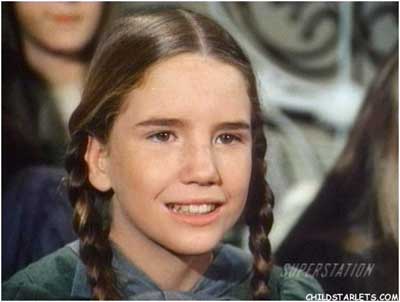
She's the author of the Little House stories, the books that eventually were adapted into a 70s TV show and a staple of '80s reruns. Wilder published her first book at the age of 65. Charles and Caroline were her parents, just like on the show. She had sisters named Mary, Carrie and Grace. She married a man named Almanzo. What I didn't realize until reading the New Yorker story is that Wilder's daughter, Rose, is thought by some scholars to be the true artist behind the works. A writer herself, Rose contributed her skills to the series, though there's debate about exactly how much she added. The story's worth a read.
But as famous as the books are, it's the TV show that fascinated me as a kid, for a couple of reasons. First, they had good stories. Also, they were set in southern Minnesota, where I lived. Hey, the Ingalls clan is traveling to Mankato in a covered wagon to get some supplies. We live 15 miles from there! Sleepy Eye, Walnut Grove, all familiar towns.
Not that everything made sense on the show.
For instance, in a famous episode, Laura runs away from home because she blames herself for the death of her baby brother. It's an emotional episode. Heartwarming. Ernest Borgnine plays an old mountain man - possibly homeless, definitely disheveled - who helps Laura find her way through the darkness. Oh, yeah, and he's God. Or simply an angel sent down to Earth, following in the footsteps of Clarence from It's a Wonderful Life. But that's not even the biggest stretch on the episode. Laura runs away...to the mountains! In southern Minnesota. Minnesota's famous for many things, foremost among them its lakes. There's great fishing, perfect farmland. Some hills, woods, forests, plains. Prairies, if you will. But no mountains. Having Laura scale a mountain in southern Minnesota makes as much sense as having a character on Gossip Girl run away to a mountain in Midtown Manhattan.
At the end of the episode, she breathlessly tells Pa about the man who helped her, Jonathan. Except Jonathan's now disappeared. We can only assume he's ascended back up to heaven for a bath and shave. Or perhaps he's running away from the law, finally aware that he wasn't supposed to be within 100 yards of children.
Still, during the final minutes, when Charles finds Laura - with the help of the bearded and ever-present Mr. Edwards - I feel a lump in my throat.
By the way, here's the real Charles Ingalls.

I'm sure it was a tough call, but producers made the right choice by not having Michael Landon look like the real Charles, who had a John-Brown-after-the-slave-revolt look that wouldn't have translated to television.

Charles - on the show - is one of my favorite characters ever on TV. Combining Ali-like fighting skills, the bravery of William Wallace and the moral sense of Ghandi with the parenting skills of Dr. Spock, he was a superman disguised as an everyman.
Even in this episode, Charles cared for his opponent following the fight, an aging boxer taken advantage of by his sleazy promoter.
The guy battled bullies, such as the new male teacher in town who enjoyed slapping kids with a ruler. Charles ended that practice. The guy even confronted Frank and Jesse James, in one of the coolest if ridiculous episodes. The James boys take over a house and hold Mary hostage. The ludicrousness comes from the fact one of the characters on the show is a kid named Ford who, you guessed it, just happens to be the guy who shoots Jesse James years later. At least they didn't hide out in the mountains.
While Charles and Laura often carried the show, Little House also featured superb supporting characters. Some good, some evil.
Nels Oleson was an enigma. A caring, sensitive man who doubled as a valued town leader, the lean, angular merchant has to be docked for marrying the conniving, gossiping Harriet, a nightmare of a woman. During their courting days Harriet must have displayed similar signs, yet Nels forged ahead with the wedding. Together they produced Nellie and Willie, one of the more evil girls anyone's ever seen and a bratty, unattractive, undersized boy who struggled with school and basic logic, as if Harriet dropped him on his head on the mercantile's floor. To top it off, they adopted a little girl named Nancy, a blond brat who filled the evil girl role after Nellie grew up and matured into a nice woman. It seemed to prove that it was nurture, not nature, that screwed up the Oleson children, leading me to believe Nels spent too much time in the store and not enough time with the kids.
Nellie. What a perfect character. Whether taunting a stuttering girl or faking paralysis for sympathy, Nellie proved the perfect foil to Laura. If Nellie existed on TV today she'd be the one ridiculing the 115-pound girl and calling her fat, leading to the gal developing a dangerous eating disorder.
Willie Oleson displayed moments of humanity, despite having the characteristics of the bumbling, dim-witted henchmen on the old Batman shows. In one episode, the kindly, caring teacher, Miss Beadle, sends the children home early on Christmas Eve. Unfortunately, a snowstorm blows through the prairie - and over the mountains, I guess - trapping many of the kids. The school turns into a triage center. Children die. A devastated Miss Beadle weeps, blaming herself, as do some townsfolk. The normally delinquent Willie consoles the teacher and strokes her hair.
Little House dealt head-on with numerous tragedies, whether it was that epic snowstorm, the Ingalls' baby boy dying, or Albert's descent into morphine addiction and subsequent sickness (he didn't actually die on the show but it's implied he's well on his way). One of the sadder storylines involved oldest sister Mary's blindness. Who can forget when she told Charles and the doctor (she went to the eye doctor in Mankato - so did I! Another connection), "I can see," when really she couldn't? She gets sent to a school for the blind, where she eventually thrives and has a son. But following through on the apparent anti-baby theme that permeated Little House, the baby boy dies in a horrific fire at the school, set by Albert and a buddy who were smoking. Alice Garvey - wife of football-star-turned-burly-actor Merlin Olsen - dies with the kid, despite smashing windows while clutching the child. These types of scenes resonate with an 8-year-old latch key kid when he watches them at 4 in the afternoon.
One of my favorite episodes involved the first "human forward pass." Albert's football team battles a squad sporting a big, dumb doofus who dominates the field. An unpopular, struggling blind boy plays for Albert's team. In the final scene, Albert steps on the kid's hand as he propels Albert over the angry ogre - Walter Payton-like - for the winning touchdown. Even in the 1800s the play was probably illegal, but it showed a genius and creativity not seen again on a field until Bill Walsh took over in San Francisco.
The show ended in explosive fashion. It's sort of a convoluted storyline, but the bottom line is a greedy tycoon owns the land Walnut Grove sits on and is going to take it over, by force or otherwise. The townsfolk - who have battled everything from Jesse James to typhus - refuse to go away quietly. That Minnesota spirit - and knowledge of illegal explosives - shines through. So everyone places dynamite in each building, blowing everything up as the land grabber looks on in horror.
Little House probably held on a few years too long. People moved to Mankato, the Olesons worked in a casino, Laura became a teacher, various adoptees came and went. But it was a good show. And one of the few shows or movies that was better than the books. Just wish they hadn't put Laura on that mountain.
Little House dealt head-on with numerous tragedies, whether it was that epic snowstorm, the Ingalls' baby boy dying, or Albert's descent into morphine addiction and subsequent sickness (he didn't actually die on the show but it's implied he's well on his way). One of the sadder storylines involved oldest sister Mary's blindness. Who can forget when she told Charles and the doctor (she went to the eye doctor in Mankato - so did I! Another connection), "I can see," when really she couldn't? She gets sent to a school for the blind, where she eventually thrives and has a son. But following through on the apparent anti-baby theme that permeated Little House, the baby boy dies in a horrific fire at the school, set by Albert and a buddy who were smoking. Alice Garvey - wife of football-star-turned-burly-actor Merlin Olsen - dies with the kid, despite smashing windows while clutching the child. These types of scenes resonate with an 8-year-old latch key kid when he watches them at 4 in the afternoon.
One of my favorite episodes involved the first "human forward pass." Albert's football team battles a squad sporting a big, dumb doofus who dominates the field. An unpopular, struggling blind boy plays for Albert's team. In the final scene, Albert steps on the kid's hand as he propels Albert over the angry ogre - Walter Payton-like - for the winning touchdown. Even in the 1800s the play was probably illegal, but it showed a genius and creativity not seen again on a field until Bill Walsh took over in San Francisco.
The show ended in explosive fashion. It's sort of a convoluted storyline, but the bottom line is a greedy tycoon owns the land Walnut Grove sits on and is going to take it over, by force or otherwise. The townsfolk - who have battled everything from Jesse James to typhus - refuse to go away quietly. That Minnesota spirit - and knowledge of illegal explosives - shines through. So everyone places dynamite in each building, blowing everything up as the land grabber looks on in horror.
Little House probably held on a few years too long. People moved to Mankato, the Olesons worked in a casino, Laura became a teacher, various adoptees came and went. But it was a good show. And one of the few shows or movies that was better than the books. Just wish they hadn't put Laura on that mountain.
Monday, September 28, 2009
Sunday nights were always a miserable time
I hated 60 Minutes as a kid.
It had nothing to do with Mike Wallace, Ed Bradley or even Andy Rooney's eyebrows.
Hearing the famous tick, tick, ticking served as a televised reminder that the weekend was nearly over, and that in 14 hours, I'd be walking to school. Homework I neglected for two nights needed to be completed.
It was a time to reflect. Saturday had been such a good time, so had Friday night and Sunday afternoon. We watched some college football or college hoops. Maybe we traveled to grandma or grandpa's for the weekend. Maybe I'd gone to a youth basketball tournament. Maybe we'd gone to the big city of Rochester to watch my uncle's basketball team play. Whatever I'd done, it had been fun. But now, it was 6 p.m., and all that was gone. Replaced by algebra and confusion. Sunday nights were a time to complete an essay for English class, one the teacher assigned two weeks earlier and expected one day later.
60 Minutes haunted and taunted me. Time was running out, for corrupt used car salesmen about to be exposed by Mike Wallace in front of a national audience, and for me.
Football season was especially torturous. If the late NFL game on CBS slid past 6 p.m., it set the entire night's schedule back, meaning the start of 60 Minutes brought me even closer to the end of the weekend. Pat Summerall patiently reminded viewers that 60 Minutes was coming up immediately after the game, except for on the West Coast, which existed in an alternate reality and would be treated to Quincy reruns.
60 Minutes wasn't alone. ABC often chose Sunday night to show old James Bond movies. Moonraker, Goldfinger, The Man With the Golden Gun, From Russia With Love. All classics. They are movies I've watched a half dozen times each and even today if I come across any James Bond flick on TV - even a Timothy Dalton one - I'll put down the remote for at least a half hour. But when ABC showed those movies on Sunday nights in the 1980s, I loathed 007. His arrogance, his womanizing. Because if Bond was on my TV, it meant I'd be in school the next day. I took out my frustration on her Majesty's finest man. I all but cheered for Goldfinger's laser.
ABC's chief programmers installed a Pavlovian response in me. When I heard the theme song or saw Sean Connery's face or Roger Moore's mug, I started to panic, knowing my homework wasn't done and that, barring a snowstorm, school was just a few short hours away.
I wasn't alone with this. My dad often got Sunday night headaches, as the nerves in his head apparently hated the first night of the week as much as I did. My dad knew the same thing I did: Nothing's worse than Monday mornings, but Sunday nights aren't much better.
Things have changed in the past 20 years. Slightly. Now I can appreciate 60 Minutes for its journalistic excellence, and no longer view the program as an enemy of my personal freedom. But when I watch my Sunday night shows now - whether it's Cold Case or 22 consecutive hours of Law & Order: Criminal Intent on cable - I still do realize that the end is again near. Monday awaits. A long work night awaits. The occasional Sunday night headache strikes, another trait I inherited from my dad.
The major difference is that while I used to be up at 7:30 for school, there's now only one Monday a month when I wake up early. And by early I mean before 11 a.m.
It's one of the lessons I've learned as an adult: Sunday nights aren't so bad if you rarely see Monday mornings.
It had nothing to do with Mike Wallace, Ed Bradley or even Andy Rooney's eyebrows.
Hearing the famous tick, tick, ticking served as a televised reminder that the weekend was nearly over, and that in 14 hours, I'd be walking to school. Homework I neglected for two nights needed to be completed.
It was a time to reflect. Saturday had been such a good time, so had Friday night and Sunday afternoon. We watched some college football or college hoops. Maybe we traveled to grandma or grandpa's for the weekend. Maybe I'd gone to a youth basketball tournament. Maybe we'd gone to the big city of Rochester to watch my uncle's basketball team play. Whatever I'd done, it had been fun. But now, it was 6 p.m., and all that was gone. Replaced by algebra and confusion. Sunday nights were a time to complete an essay for English class, one the teacher assigned two weeks earlier and expected one day later.
60 Minutes haunted and taunted me. Time was running out, for corrupt used car salesmen about to be exposed by Mike Wallace in front of a national audience, and for me.
Football season was especially torturous. If the late NFL game on CBS slid past 6 p.m., it set the entire night's schedule back, meaning the start of 60 Minutes brought me even closer to the end of the weekend. Pat Summerall patiently reminded viewers that 60 Minutes was coming up immediately after the game, except for on the West Coast, which existed in an alternate reality and would be treated to Quincy reruns.
60 Minutes wasn't alone. ABC often chose Sunday night to show old James Bond movies. Moonraker, Goldfinger, The Man With the Golden Gun, From Russia With Love. All classics. They are movies I've watched a half dozen times each and even today if I come across any James Bond flick on TV - even a Timothy Dalton one - I'll put down the remote for at least a half hour. But when ABC showed those movies on Sunday nights in the 1980s, I loathed 007. His arrogance, his womanizing. Because if Bond was on my TV, it meant I'd be in school the next day. I took out my frustration on her Majesty's finest man. I all but cheered for Goldfinger's laser.
ABC's chief programmers installed a Pavlovian response in me. When I heard the theme song or saw Sean Connery's face or Roger Moore's mug, I started to panic, knowing my homework wasn't done and that, barring a snowstorm, school was just a few short hours away.
I wasn't alone with this. My dad often got Sunday night headaches, as the nerves in his head apparently hated the first night of the week as much as I did. My dad knew the same thing I did: Nothing's worse than Monday mornings, but Sunday nights aren't much better.
Things have changed in the past 20 years. Slightly. Now I can appreciate 60 Minutes for its journalistic excellence, and no longer view the program as an enemy of my personal freedom. But when I watch my Sunday night shows now - whether it's Cold Case or 22 consecutive hours of Law & Order: Criminal Intent on cable - I still do realize that the end is again near. Monday awaits. A long work night awaits. The occasional Sunday night headache strikes, another trait I inherited from my dad.
The major difference is that while I used to be up at 7:30 for school, there's now only one Monday a month when I wake up early. And by early I mean before 11 a.m.
It's one of the lessons I've learned as an adult: Sunday nights aren't so bad if you rarely see Monday mornings.
Friday, September 18, 2009
So a community college student walks into a bar...
Last night I unfortunately missed the premiere of NBC's "Community." The sitcom focuses on a lawyer who returns to community college because his degree wasn't real. Hijinks ensue. Critics give it decent reviews, and the show also marks the return of Chevy Chase to the land of the living (if he can be in this, is it too much to ask for him to get the lead role in the long-rumored remake of "Fletch?").
Community college advocates expressed concern that the show would portray two-year schools in an unflattering light. In the same way PETA writes letters of protest whenever a celebrity dons a fur coat or a cow is milked against its will, I pictured community college leaders penning notes of disappointment and outrage to NBC. Only they'd be misspelled...because they're from community colleges! (Could be a decent joke for the new show, NBC.)
I attended Worthington Community College in southwestern Minnesota for two years. Nearly everyone on my father's side of the family attended WCC, which now carries the longer and geographically vague name Minnesota West Community and Technical College. Louise took classes at a community college while pursuing her nursing degree. Over the years, I've heard pretty much every joke possible about two-year schools. I've made some of my own.
When people ask where I went to school, I say "St. John's. The Minnesota one," and will only occasionally mention that my college life started at a JUCO. Community colleges often still remain more punchline than destination.
And my time at WCC included many bizarre moments that might only be possible at two-year institutions. A chronically confused professor of mine once asked a question that a student answered, "I think it was Teddy Roosevelt." To which she replied, "No, no, it was Theodore Roosevelt." I engaged in passionate debates in history class with a 45-year-old woman who had three kids and thought she knew everything. She might have been right.
Housing choices were limited. No dorms. Sophomore year I lived with four other guys in a house that had four bedrooms. I discovered that only after agreeing to move in. For nine months I slept in the dining room. I had my bed, a side table, and a poorly constructed curtain that provided less privacy than a hospital gown. My roommates stayed up until three, four in the morning, ending their nights by watching comedies or action movies, meaning I went to sleep with the sounds of belly laughter or explosions ringing in my head.
However, in the 16 years since I first started school in Worthington, I've come to a realization: I'd love for my (for now theoretical) child to go to community college. The price is the most obvious reason. At a time when private schools and state universities continue to raise tuition to the point where parents have to offer to sell their second-born to allow their firstborn to go to college, the low, low costs of community colleges welcome you with open arms.
It's easy to transfer to a four-year school. Kids do miss out on freshman hazing. They have to make a new group of friends when they transfer. They have to attend orientation as a 20-year-old surrounded by wide-eyed 18-year-olds. They have to listen to clichéd jokes about community colleges. There are worse things in the world, like being the poster child for documentaries about college students weighed down and destroyed by debt. So why not take advantage of the financial breaks?
But community colleges don't have to just be treated like a cheap prison sentence ("I'm doing a two-year stint up at Bronx Community College. I hope to get paroled in a year.") Students actually...learn quite a lot at community colleges. Smart, passionate professors teach there. The best journalism teacher I had taught at Worthington, a former newspaper editor who had superb insight into the business and was extremely encouraging with my writing from the first class I had with him. True, the rest of the class was filled with kids who would hold a newspaper upside down if told to read it - "the words don't make sense" - but as I learned at St. John's, every class in every school has swell students who make their peers go, huh? Another English professor inspired me with his life story, and his writing.
And you can make friends for life at community colleges, just as easily as you can at a fraternity or sorority and there isn't even any paddling. The four guys I lived with in the four-bedroom-and-one-dining-room home were all great guys. One became a longtime friend.
Attending WCC gave me the chance to play college basketball for two years. My old coach, Mike Augustine, remains a valued friend. He's also an example of what community colleges can do for people. At the same time he was coaching us, he was a fellow student, a middle-aged guy who returned to school to get his teaching degree. He earned his associate's, and went on to a four-year school, followed by a successful career as a teacher. Augie was a nontraditional student who experienced a traditional benefit of two-year schools: his life improved.
A few months into my freshman year at WCC, I wanted to transfer to St. John's. My parents explained that it wasn't financially viable at the time. For a few weeks I was upset. But as I settled in and became comfortable, I grew to love my time at WCC. Sixteen years later, I'm even more grateful I spent my first two years there. My student loans were half of what they would have been. The lessons I learned in my classes remain with me. I extended my basketball career. I made friends for life.
Community college advocates shouldn't fear "Community," unless Chevy Chase's performance mirrors his effort on his talk show. Any publicity helps, and community colleges are havens for odd people and strange situations - a sitcom really should have been set in one long ago. They just happen to also be the perfect schools for hundreds of thousands of students, of all ages.
Community college advocates expressed concern that the show would portray two-year schools in an unflattering light. In the same way PETA writes letters of protest whenever a celebrity dons a fur coat or a cow is milked against its will, I pictured community college leaders penning notes of disappointment and outrage to NBC. Only they'd be misspelled...because they're from community colleges! (Could be a decent joke for the new show, NBC.)
I attended Worthington Community College in southwestern Minnesota for two years. Nearly everyone on my father's side of the family attended WCC, which now carries the longer and geographically vague name Minnesota West Community and Technical College. Louise took classes at a community college while pursuing her nursing degree. Over the years, I've heard pretty much every joke possible about two-year schools. I've made some of my own.
When people ask where I went to school, I say "St. John's. The Minnesota one," and will only occasionally mention that my college life started at a JUCO. Community colleges often still remain more punchline than destination.
And my time at WCC included many bizarre moments that might only be possible at two-year institutions. A chronically confused professor of mine once asked a question that a student answered, "I think it was Teddy Roosevelt." To which she replied, "No, no, it was Theodore Roosevelt." I engaged in passionate debates in history class with a 45-year-old woman who had three kids and thought she knew everything. She might have been right.
Housing choices were limited. No dorms. Sophomore year I lived with four other guys in a house that had four bedrooms. I discovered that only after agreeing to move in. For nine months I slept in the dining room. I had my bed, a side table, and a poorly constructed curtain that provided less privacy than a hospital gown. My roommates stayed up until three, four in the morning, ending their nights by watching comedies or action movies, meaning I went to sleep with the sounds of belly laughter or explosions ringing in my head.
However, in the 16 years since I first started school in Worthington, I've come to a realization: I'd love for my (for now theoretical) child to go to community college. The price is the most obvious reason. At a time when private schools and state universities continue to raise tuition to the point where parents have to offer to sell their second-born to allow their firstborn to go to college, the low, low costs of community colleges welcome you with open arms.
It's easy to transfer to a four-year school. Kids do miss out on freshman hazing. They have to make a new group of friends when they transfer. They have to attend orientation as a 20-year-old surrounded by wide-eyed 18-year-olds. They have to listen to clichéd jokes about community colleges. There are worse things in the world, like being the poster child for documentaries about college students weighed down and destroyed by debt. So why not take advantage of the financial breaks?
But community colleges don't have to just be treated like a cheap prison sentence ("I'm doing a two-year stint up at Bronx Community College. I hope to get paroled in a year.") Students actually...learn quite a lot at community colleges. Smart, passionate professors teach there. The best journalism teacher I had taught at Worthington, a former newspaper editor who had superb insight into the business and was extremely encouraging with my writing from the first class I had with him. True, the rest of the class was filled with kids who would hold a newspaper upside down if told to read it - "the words don't make sense" - but as I learned at St. John's, every class in every school has swell students who make their peers go, huh? Another English professor inspired me with his life story, and his writing.
And you can make friends for life at community colleges, just as easily as you can at a fraternity or sorority and there isn't even any paddling. The four guys I lived with in the four-bedroom-and-one-dining-room home were all great guys. One became a longtime friend.
Attending WCC gave me the chance to play college basketball for two years. My old coach, Mike Augustine, remains a valued friend. He's also an example of what community colleges can do for people. At the same time he was coaching us, he was a fellow student, a middle-aged guy who returned to school to get his teaching degree. He earned his associate's, and went on to a four-year school, followed by a successful career as a teacher. Augie was a nontraditional student who experienced a traditional benefit of two-year schools: his life improved.
A few months into my freshman year at WCC, I wanted to transfer to St. John's. My parents explained that it wasn't financially viable at the time. For a few weeks I was upset. But as I settled in and became comfortable, I grew to love my time at WCC. Sixteen years later, I'm even more grateful I spent my first two years there. My student loans were half of what they would have been. The lessons I learned in my classes remain with me. I extended my basketball career. I made friends for life.
Community college advocates shouldn't fear "Community," unless Chevy Chase's performance mirrors his effort on his talk show. Any publicity helps, and community colleges are havens for odd people and strange situations - a sitcom really should have been set in one long ago. They just happen to also be the perfect schools for hundreds of thousands of students, of all ages.
Sunday, September 13, 2009
More frightening moment: Redrum, redrum or floating child?
One of the more anticipated new TV series this fall is ABC's "V," a remake of the series that tormented children in the 1980s with its story of aliens taking over Earth while using humans for food and sucking the planet's water out for their own use. The original remains one of the best miniseries ever. There's likely no way the new series will match the popularity of the original, nor will it duplicate the surprises.
The most iconic moment in the original V was when Diana, the evil yet charismatic - and fetching - leader of the V, stunned America by devouring a guinea pig whole. Take our water? Ok. Store our bodies in human Tupperware containers so you can feed us to your starving people later? Ok.
Eat our guinea pigs? Now, we KNOW they're evil. Watching the above clip again, it's hard not to be struck by how low-tech the special effects were. It is, in fact, almost laughable the way her head expands as the little piggy plummets downward. No matter. For a generation of kids who watched her eat the poor creature - and enjoy it - Diana's meal was one of the more memorable moments of their TV childhood. But even aside from that scene, the entire series oozed creepiness, with the aliens methodically taking over after saying they came in peace. Eventually the humans fight back, Earth is saved and the compelling miniseries spawned a so-so regular series, which didn't last long.
But the original series remains one of the more frightening television moments of my childhood. The other most haunting programs and movies?
1. Salem's Lot. The miniseries starred Hutch, also known as a brooding David Soul. It's based on Stephen King's classic book, one of the first of his career. The miniseries was nominated for Emmys and received rave reviews. But as a kid, one scene remained with me for years and made me leery whenever I'd go near a window at night.
Unfortunate vampire child Ralphie Glick floats outside his brother Danny's window, commanding him to let him in, all the while scratching the glass while grinning like he possesses a really amusing secret. Watching Diana eat a guinea pig today is more amusing than frightening. Watching this kid hover outside his older sibling's window? I have to pause it several times. And tonight, if I hear scratching outside, I'm turning on the lights and going under the covers. This scene was followed by other ones that remain seared into my mind, among them the gravedigger sitting in his rocking chair, having already been vampireized, and Danny Glick - the boy in the bed in the clip - sitting up in his coffin, just as part 1 of the miniseries ended. Years later I read the book, which was nearly as frightening as the original series. In 2004 TNT remade the series with Rob Lowe. Not haunting.
2. Redrum, Redrum, Redrum, Redrum, Redrum. The Shining. Another Stephen King book turned into a movie, probably best known for Jack Nicholson's over-the-top descent into madness. But as a kid, listening to the little boy chant Redrum, Redrum, in a low, eerie voice, was the most memorable scene, particularly when it's revealed for the spelling challenged that redrum is murder spelled backward. If this kid had chanted this while also floating outside a window, I'd have never turned on the TV again.
3. The Day After. Designed to warn America about the dangers of nuclear war. I guess it worked. Although I'm assuming the people it was meant to stir - adults - held the same opinions after it that they had before, depending on their political affiliation. The people the TV movie really damaged: children. What was our response supposed to be? A Million Kid March on Washington, demanding an end to nuclear testing? A generation earlier, the Cuban Missile Crisis brought the threat of nuclear destruction home to millions of kids. They also learned to dive under their desks in the event of a nuclear attack (you're supposed to flee trailers during a tornado, but during a nuclear war, dive under a tiny school desk. Sure).
I can still picture the mushroom cloud rising over Kansas, whose landscape was too much like southern Minnesota's. For the next several weeks I couldn't help but picture a big ol' nuke landing near Janesville. If the Soviets felt they needed to take out the nation's farmland, why wouldn't Minnesota be next? Jason Robards portrays one of the main characters, who spends the day after wandering around, dying horribly of radiation poisoning.
The show affected millions. TV stations opened hotlines to counsel the frightened.
"It's okay, that was fiction. Nothing like this will happen, unless the Russians accidentally bomb a Korean jetliner and we have to nuke them to send a message and they retaliate. Then, yes, The Day After could be accurate. In which case, hide under a desk."
Nightline hosted a debate between William Buckley and Carl Sagan. All of those things were good for teens and adults. Meanwhile, 8-year-olds across the country went to bed just waiting for the nukes to fly. Thanks, ABC.
Are there equivalents to these shows today? Are children today haunted by Lost? Or by Survivor's Tribal Council? Was it just a simpler time when poor special effects - a fog machine appears to have gone haywire behind floating vampire boy - and creepy children were all it took to frighten millions? Today's kids do have plenty to worry about, from terrorism to cyber bullying. But at least they don't have to deal with the memory of Ralphie Glick. Little Ralphie, forever floating, forever scratching, forever terrorizing.
Subscribe to:
Posts (Atom)